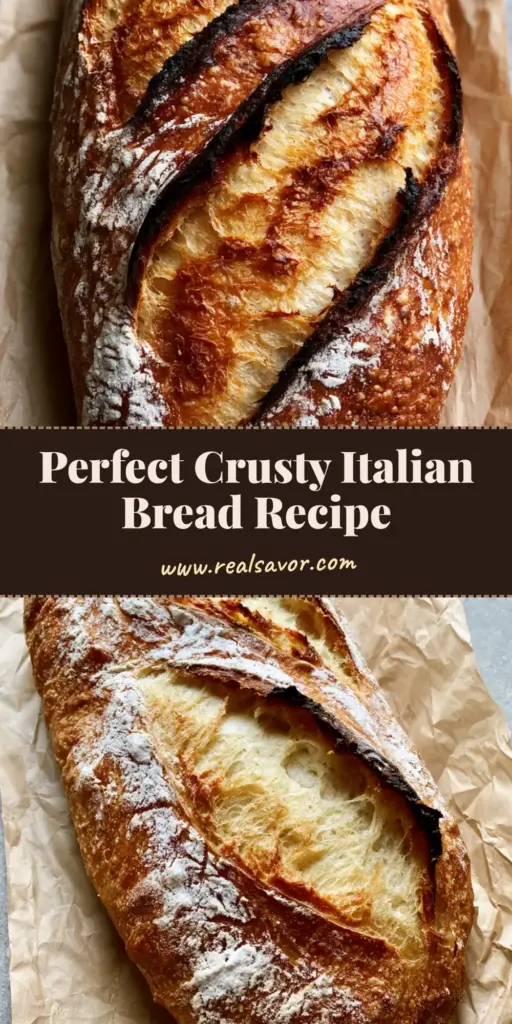
There is nothing quite like the aroma of a fresh Crusty Italian Bread Recipe wafting through your kitchen, promising a texture that rivals the finest artisan bakeries in Rome. This particular loaf is designed for the home cook who craves that specific, high-contrast experience: a deep golden-brown, highly textured crust that shatters upon impact, revealing a cloud-like, airy interior. Whether you are a seasoned baker or a novice, achieving that signature crackly exterior and porous crumb is a science we have perfected here.
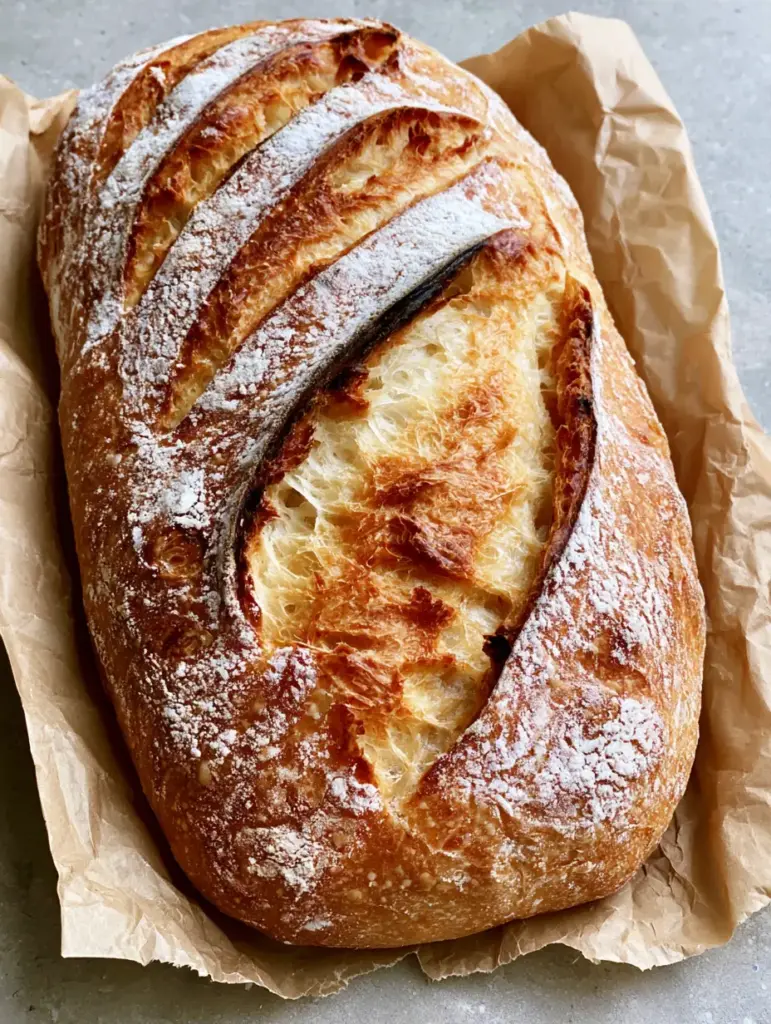
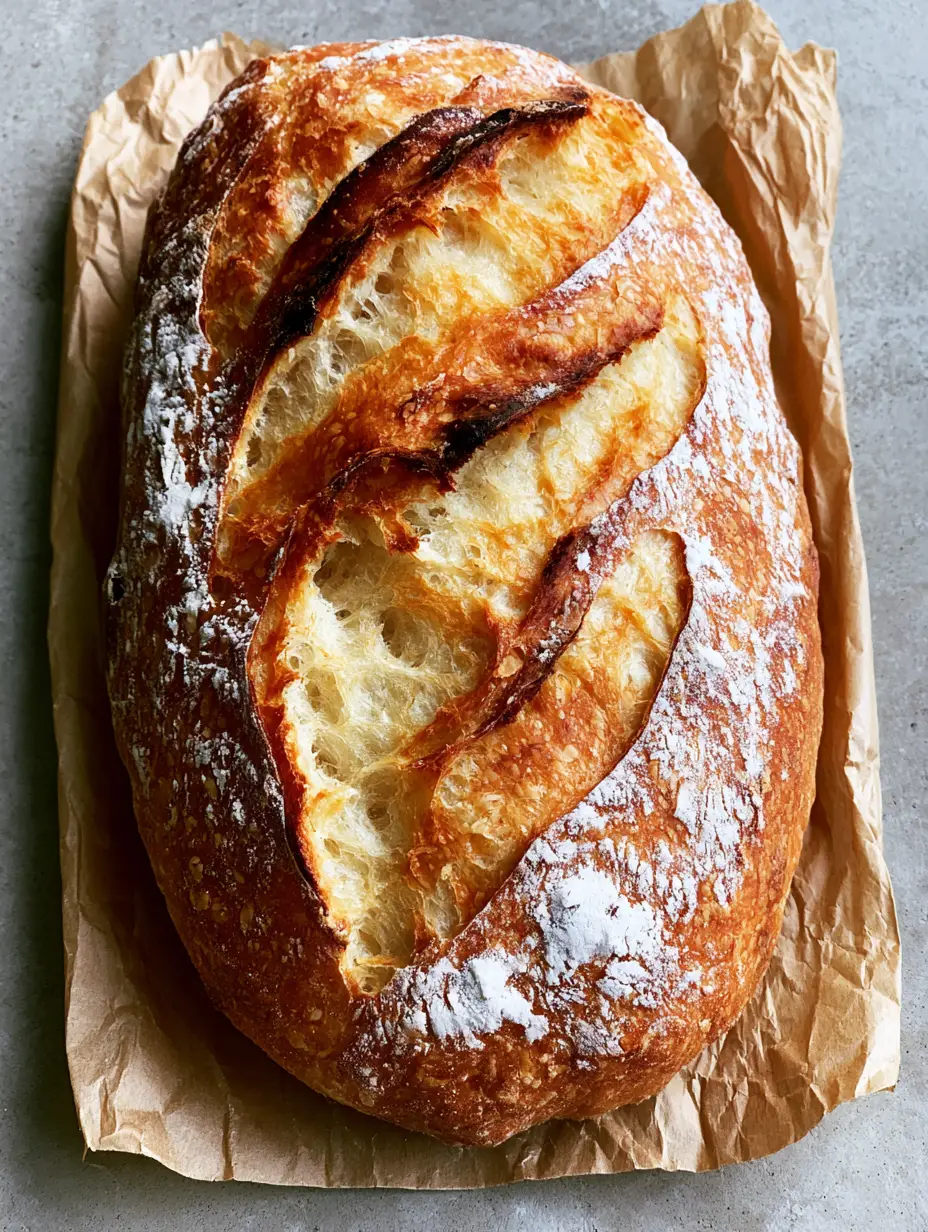
When you pull this loaf from the oven, you will see three deep diagonal scores that have bloomed beautifully, showcasing a pale, porous crumb against a dark, charred-peak crust. A light, uneven dusting of white flour clings to the surface, giving it a rustic, professional finish. This is not just bread; it is a sensory masterpiece that sounds as good as it tastes—listen for the “song of the bread” as the crust crackles while cooling on its crinkled parchment paper.
The Anatomy of an Authentic Artisan Loaf
To master this Crusty Italian Bread Recipe, we must focus on the interplay between high-heat moisture and long-fermentation dough. The results are unmistakable and visually stunning:
- The Crackly Crust: A high-hydration dough combined with a steam-filled oven creates a thin, glass-like crust with visible charred peaks.
- The Airy Interior: Large, irregular holes (the “open crumb”) are achieved through minimal handling and proper fermentation.
- The Visual Bloom: Strategic scoring allows the bread to expand rapidly, revealing the pale, porous heart of the loaf.
- The Rustic Finish: A final dusting of flour provides a matte contrast to the glossy, caramelized ridges of the crust.
Essential Components for the Perfect Italian Loaf
Success starts with high-quality ingredients, each serving a specific scientific purpose in the structural integrity of your Crusty Italian Bread Recipe. We use a combination of pantry staples and precision ratios to ensure the loaf is both sturdy and light.
Bread Flour: 4 cups (500g). Bread flour has a higher protein content (usually 12-14%) than all-purpose flour, which is essential for developing the strong gluten network required to trap air bubbles. This ensures your loaf has the height and structure to support those deep diagonal scores.
Warm Water: 1.5 cups (355ml). Water at approximately 105°F (40°C) hydrates the flour and activates the yeast without killing it. The high hydration level (around 70%) is the secret to creating the steam necessary for a thin, crispy crust.
Active Dry Yeast: 2.25 tsp (7g). This is the leavening agent that breathes life into the dough. It consumes the sugars in the flour, releasing carbon dioxide that creates the airy, porous crumb visible in the final bake.
Fine Sea Salt: 2 tsp (12g). Salt is not just for flavor; it regulates yeast activity and strengthens the gluten strands. Without it, the dough would rise too quickly and collapse, losing that iconic oblong shape.
Granulated Sugar: 1 tsp (4g). A tiny amount of sugar provides immediate food for the yeast during the initial bloom. It also aids in the Maillard reaction, helping achieve those deep golden-brown charred peaks on the crust.
Extra Flour for Dusting: 2 tbsp (15g). A light, uneven dusting of white flour on the surface before baking provides the rustic, artisan look described in our visual blueprint. It also prevents the dough from sticking to the scoring blade.
Professional Tools for Bakery-Level Results
To achieve the specific textures of this Crusty Italian Bread Recipe, you will need a few key pieces of equipment. These tools help replicate the environment of a professional deck oven.
A heavy-duty baking stone or a large cast-iron Dutch oven is highly recommended to provide the intense bottom heat needed for “oven spring.” You will also need crinkled brown parchment paper, which prevents sticking and allows for easy transport of the delicate, risen dough into the hot oven.
For the visual signature of three deep diagonal scores, a bread lame (a specialized razor blade) is preferred, though a very sharp serrated knife can work in a pinch. Finally, a spray bottle filled with filtered water is essential for creating the steam that results in a crackly, textured crust.
The Science of Mixing and First Fermentation
Begin by whisking your bread flour and salt in a large bowl to ensure even distribution. In a separate small vessel, combine the warm water, sugar, and yeast, letting it sit for about 5-10 minutes until it becomes frothy and fragrant—this is the “bloom.”
Pour the yeast mixture into the flour and stir with a wooden spoon until a shaggy, hydrated mass forms. Transfer the dough to a lightly floured surface and knead for 8-10 minutes. You are looking for the dough to become smooth and elastic; it should pass the “windowpane test,” where a small piece can be stretched thin enough to see light through it without tearing.
Place the dough in a lightly oiled bowl, cover with a damp cloth, and let it rise in a warm, draft-free spot for 1.5 to 2 hours. The dough should double in size, becoming filled with the gases that will eventually form the airy interior crumb. This slow rise is where the complex, yeasty flavor of a true Crusty Italian Bread Recipe is born.
Shaping and the Final Proof
Once risen, gently turn the dough out onto a floured surface. Do not “punch” it down aggressively; you want to preserve as many of those air bubbles as possible. Gently fold the edges toward the center to create a taut, oblong loaf shape.
Place the shaped loaf onto a piece of crinkled brown parchment paper. The crinkles actually help air circulate slightly under the dough. Cover loosely and let it undergo its second rise (proofing) for another 45-60 minutes. During this time, preheat your oven to 450°F (232°C) with your baking stone or heavy pan inside.
Scoring and Achieving the Charred Peak Crust
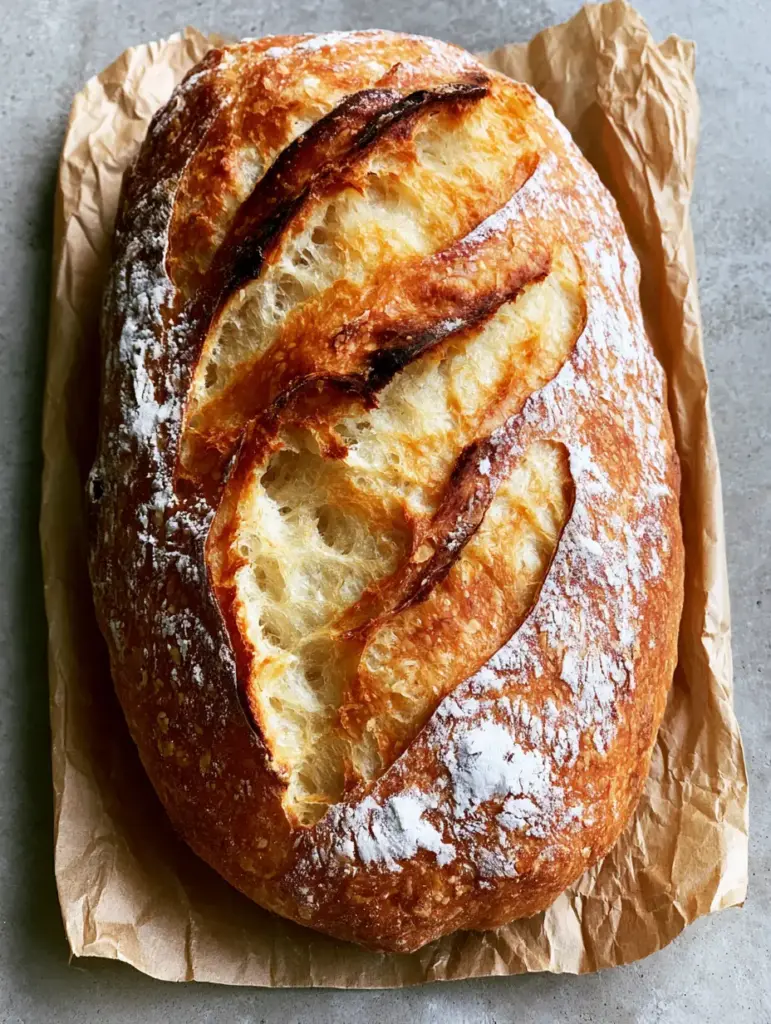
Just before the loaf goes into the oven, use your flour for dusting to create a light, uneven coating over the top. This is the moment to execute the three deep diagonal scores. Hold your lame at a 45-degree angle and commit to quick, confident slashes. These scores should be deep enough to allow the pale crumb to expand and “peek” through during the bake.
Slide the parchment paper and dough onto the hot baking stone. Immediately spray the oven walls with water to create a burst of steam. This moisture keeps the surface of the dough supple, allowing it to expand fully before the heat sets the crust. Bake for 25-30 minutes until the exterior is a deep golden-brown with visible charred peaks on the ridges of the scores.
Expert Tips for Success
- Watch the Steam: If you don’t have a spray bottle, place a shallow pan of boiling water on the bottom rack of the oven. This is the single most important factor for a crackly crust.
- Flour Matters: Do not swap bread flour for all-purpose if you want that high, airy rise. The protein difference is critical for the Crusty Italian Bread Recipe structure.
- The Cooling Rule: Never cut into a hot loaf. The bread continues to cook and set its internal structure while cooling. Wait at least 60 minutes for the perfect crumb texture.
- Check for Doneness: Tap the bottom of the loaf; it should sound hollow. For precision, the internal temperature should reach 190°F-200°F (88°C-93°C).
Storing and Reviving Your Italian Bread
Artisan bread is best enjoyed the day it is made. However, if you have leftovers, store the loaf in a paper bag at room temperature for up to two days. Avoid plastic bags, as they trap moisture and turn your beautiful crackly crust soft and gummy.
To revive a day-old loaf, mist it lightly with water and place it in a 350°F (175°C) oven for 5-8 minutes. This will restore the crunch of the crust while softening the interior. For longer storage, this bread freezes beautifully. Slice it before freezing, then toast individual slices directly from the freezer.
What to Serve With This Crusty Italian Bread Recipe
This loaf is the ultimate vessel for sauces and hearty pairings. Its sturdy structure makes it perfect for dipping into the rich, savory sauce of an Italian sausage bow tie pasta (coming soon). The airy crumb acts like a sponge, soaking up every bit of flavor.
If you prefer something with a bit of a kick, try serving thick slices alongside spicy garlic butter chicken tortellini. The cooling, pale crumb balances the heat of the garlic butter perfectly. For a more modern twist, use a slice of this bread as a base for dipping into a vibrant smoky red chimichurri sauce.
Finally, if you are looking for a complete meal, this bread serves as an excellent side to a high protein Italian pasta salad, providing the necessary crunch to complement the fresh vegetables and pasta. It is a versatile staple that elevates any dining experience.
Frequently Asked Questions
While you can, bread flour is highly recommended. Its higher protein content creates a stronger gluten network, which is necessary to support the large air bubbles and ‘open crumb’ characteristic of this Italian loaf.
Avoid over-handling the dough after the first rise. Gently shape the loaf to preserve the carbon dioxide bubbles created by the yeast. High hydration doughs (like this one) naturally produce larger, more irregular holes.
You should wait at least 60 minutes. Cutting into the bread too soon allows the steam to escape, which can lead to a gummy, compressed interior. The structure ‘sets’ as it cools.
The secret lies in high hydration dough and creating a steam-filled environment in the oven during the first 10 minutes of baking. Steam keeps the surface moist, allowing the bread to expand fully and creating a thin, crackly crust.
Charred peaks occur when the oven is sufficiently hot (at least 450°F) and the scoring is done at a slight angle. If your oven temperature is too low or your scoring is too shallow, the crust will be even and pale rather than textured.
The Ultimate Crusty Italian Bread Recipe
Crusty Italian Bread Recipe: The Secret to a Crackly, Bakery-Style Loaf
Ingredients
Equipment
Method
- Combine warm water (355ml), sugar (4g), and yeast (7g) in a small bowl. Let sit for 5-10 minutes until frothy.
- In a large bowl, whisk flour (500g) and salt (12g). Pour in the yeast mixture and stir until a shaggy dough forms.
- Knead the dough on a floured surface for 8-10 minutes until smooth and elastic. It should pass the windowpane test.
- Place in an oiled bowl, cover, and let rise in a warm spot for 1.5 to 2 hours until doubled in size.
- Gently shape the dough into an oblong loaf. Place on crinkled parchment paper and let proof for 45-60 minutes.
- Preheat oven to 450°F (232°C). Dust the loaf with flour and make three deep diagonal scores with a lame.
- Slide onto a hot stone. Spray the oven with water. Bake for 25-30 minutes until deep golden-brown with charred peaks.
Notes
Create steam in the oven for a professional, crackly crust.
Share Your Artisan Creations!
Mastering the Crusty Italian Bread Recipe is a rewarding journey for any home cook. The combination of a shattering crust and a soft, airy interior is a culinary achievement you will want to replicate again and again. If you enjoyed this recipe, please leave a comment below and tell us how your loaf turned out!
Don’t forget to take a photo of your beautiful, scored loaf and share it with us. For more artisan baking inspiration and dinner ideas, follow us on Pinterest and save this recipe to your “Baking” board. Happy baking!