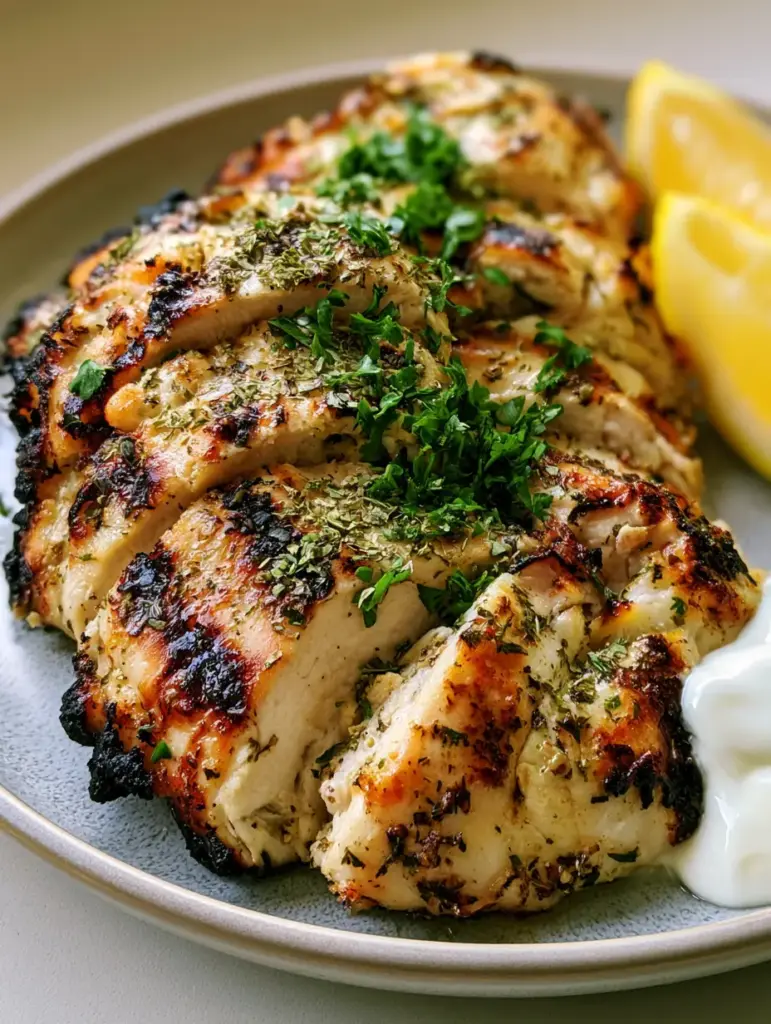
There is nothing quite as inviting as a plate of perfectly sliced, moisture-rich poultry featuring those iconic, dark charred edges. This Greek Chicken Marinade is engineered to deliver that exact restaurant-quality result in your home kitchen, combining bright citrus notes with earthy aromatics.
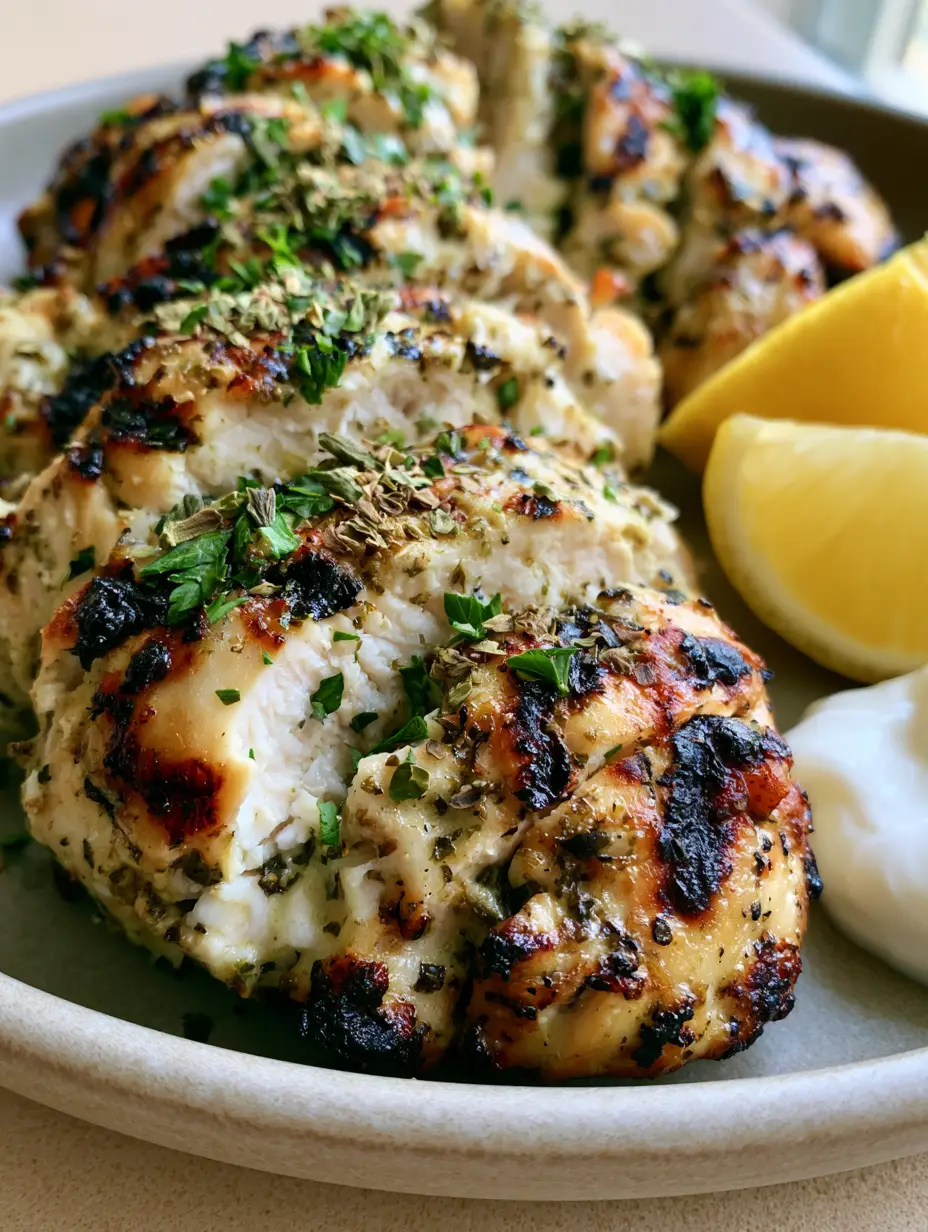
The secret to this recipe lies in the balance of acidity and high-heat fat, ensuring every bite is infused with the essence of the Mediterranean. When you look at the final dish, you will see the beautiful herb-flecked residue of dried oregano and fresh parsley clinging to the golden-brown surface.
Whether you are preparing a quick weeknight meal or hosting a backyard gathering, this marinade provides the structural integrity and flavor depth needed for professional-grade results. Let’s dive into the science and technique behind this culinary staple.
The Visual and Culinary Appeal of Our Greek Chicken Marinade
- Signature Char Marks: The combination of high-quality olive oil and a touch of natural sugars in the lemon juice facilitates the Maillard reaction for deep, golden-brown grill marks.
- Moist, Tender Texture: By utilizing a balanced acid-to-fat ratio, we ensure the chicken remains juicy on the inside while developing a firm, seared exterior.
- Herb-Flecked Aesthetic: The use of both dried oregano flakes and finely chopped fresh parsley creates a multi-dimensional green garnish that looks as good as it tastes.
- Zesty Flavor Profile: Fresh lemon wedges and a thick, creamy Greek yogurt sauce provide the necessary bright and cooling elements to contrast the smoky, seared meat.
The Anatomy of a Perfect Mediterranean Flavor Profile
To achieve the visual and sensory results described in our blueprint, every ingredient must serve a specific functional purpose. We do not just add ingredients for flavor; we add them for texture, color, and chemical reaction.
Boneless Skinless Chicken Breasts: 1.5 lbs (680g). These provide a clean canvas for the marinade and are the ideal shape for achieving those long, continuous charred grill marks when sliced.
Extra Virgin Olive Oil: 1/4 cup (60ml). This is the foundational fat that carries the fat-soluble flavors of the herbs into the meat and prevents sticking on a high-heat surface.
Fresh Lemon Juice and Zest: 3 tbsp (45ml) juice and 1 tbsp (6g) zest. The citric acid acts as a gentle tenderizer, while the zest provides the essential oils for that signature “bright” aroma.
Dried Oregano Flakes: 2 tsp (4g). Dried oregano is more potent than fresh in a marinade, providing that visible herb-flecked residue that survives the intense heat of the sear.
Fresh Garlic: 4 cloves (12g), minced. Garlic provides the pungent backbone of the marinade and contributes to the dark, caramelized bits found on the edges of the chicken.
Kosher Salt and Cracked Black Pepper: 1 tsp (6g) salt and 1/2 tsp (1g) pepper. Salt is scientifically required to denature the proteins, allowing the marinade to penetrate deeper into the muscle fibers.
Fresh Parsley: 2 tbsp (8g), finely chopped. This is used primarily as a post-cook garnish to add a pop of vibrant green color and a fresh, herbaceous finish.
Greek Yogurt Sauce: 1/2 cup (120ml) thick Greek yogurt. This serves as the cooling agent, providing a creamy textural contrast to the firm, seared chicken breast.
Essential Equipment for High-Heat Searing
To replicate the “dark charred edges” and “golden-brown grill marks” seen in our visual blueprint, you need tools that can handle and distribute high heat effectively. A heavy-bottomed cast iron grill pan or an outdoor grill is highly recommended.
You will also need a sharp chef’s knife to achieve clean, aesthetic slices of the breast meat. A meat thermometer is non-negotiable for ensuring the chicken reaches an internal temperature of 165°F (74°C) without becoming dry and losing its moist appearance.
The Step-by-Step Evolution of the Perfect Sear
Preparing the Signature Greek Chicken Marinade
In a medium glass bowl, whisk together the olive oil, lemon juice, lemon zest, dried oregano, minced garlic, salt, and pepper. Ensure the salt is fully dissolved into the emulsion to guarantee even seasoning across the poultry.
Place your chicken breasts between two sheets of plastic wrap and gently pound them to an even thickness of about 3/4 inch (2cm). This is a critical step for visual uniformity, ensuring every slice has the same ratio of char to meat.
The Marination Window
Submerge the chicken in the marinade, ensuring every surface is coated in the herb-flecked mixture. Let this sit for at least 30 minutes, but no longer than 4 hours; over-marinating in citrus can lead to a “mushy” texture that ruins the firm, seared aesthetic.
Remove the chicken from the refrigerator 15 minutes before cooking. Bringing the meat closer to room temperature allows for a more immediate and consistent sear when it hits the hot metal.
Achieving Restaurant-Quality Grill Marks
Heat your grill or cast iron pan over medium-high heat until a drop of water sizzles and evaporates instantly. Lightly oil the grates or pan surface with a high-smoke point oil to ensure the chicken doesn’t tear when you flip it.
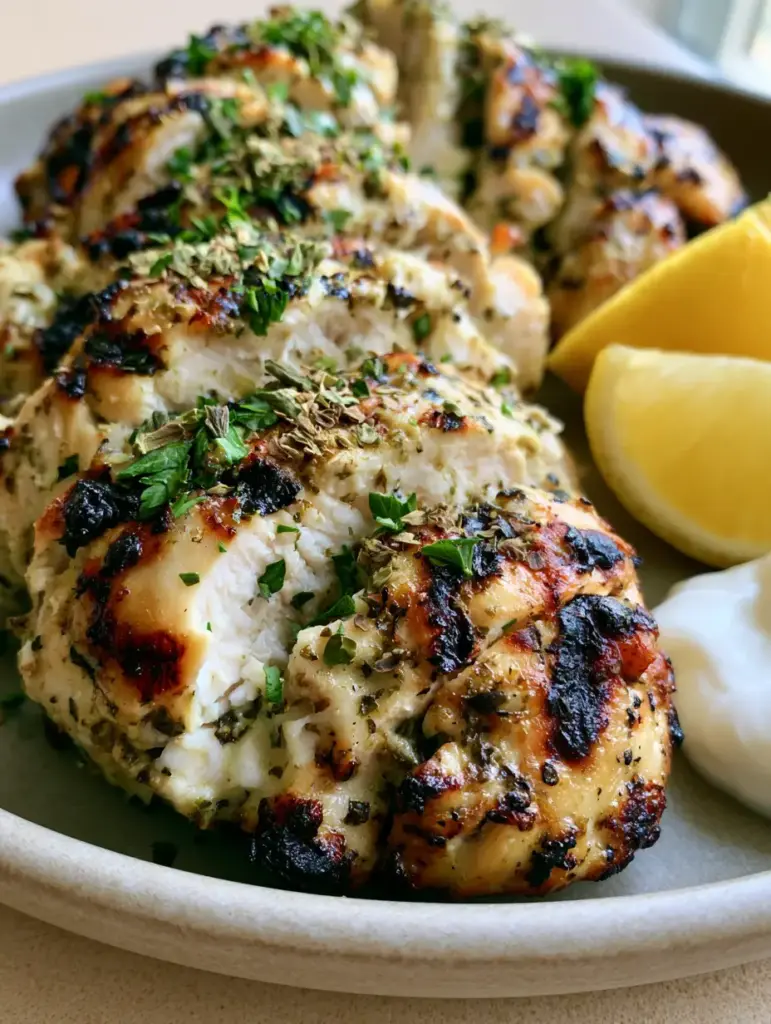
Place the chicken on the heat and do not move it for 5-6 minutes. This patience is what creates those deep, dark charred edges and moist interior. Flip only once, cooking for another 5 minutes until the internal temperature hits 165°F (74°C).
Resting and Slicing for Presentation
Transfer the chicken to a matte ceramic plate and let it rest for at least 5 minutes. This allows the juices to redistribute, ensuring the meat looks “moist” when you finally slice it on a slight diagonal.
Garnish the sliced chicken with a generous sprinkle of finely chopped fresh parsley and additional dried oregano flakes. Place two bright yellow lemon wedges on the side for a final acidic punch and a dollop of thick Greek yogurt sauce near the edge of the meat.
Expert Tips for Success
- Pat Dry: Before placing the marinated chicken on the grill, lightly pat the surface with a paper towel. This removes excess moisture that causes steaming, allowing the oil and herbs to “fry” into a crust instead.
- The 45-Degree Turn: For professional diamond grill marks, rotate the chicken 45 degrees halfway through the first side’s cooking time.
- Zest First: Always zest your lemons before juicing them. It is nearly impossible to zest a squeezed lemon, and the zest is where the most intense Greek flavor resides.
- Yogurt Quality: Use full-fat Greek yogurt for the sauce. The higher fat content provides a thicker, more stable dollop that won’t run across the plate.
Creative Pairings and Serving Suggestions
To turn this Greek Chicken Marinade into a full Mediterranean feast, consider serving it alongside a fresh crunchy Asian cabbage salad for a unique fusion of textures and brightness. The acidity of the chicken pairs beautifully with the crispness of the greens.
If you are looking for a more traditional side, this chicken is the perfect protein to accompany a zucchini spinach feta casserole. The salty feta and earthy spinach mirror the flavors in the marinade perfectly.
For those who prefer a more portable option, you can use this same marinade for Greek chicken kabobs, threading the meat with bell peppers and red onions. Alternatively, serve the sliced chicken over a bed of crispy roasted cauliflower for a low-carb, high-flavor dinner.
Storage and Reheating Protocols
Store leftover chicken in an airtight container in the refrigerator for up to 3 days. To maintain the moist texture, reheat the slices gently in a pan over medium heat with a splash of chicken broth or water.
Avoid the microwave if possible, as it can make the chicken rubbery and dull the vibrant herb-flecked residue. If you must use a microwave, use a low power setting and cover the dish to trap steam.
Frequently Asked Questions
Yes, chicken thighs work beautifully with this Greek Chicken Marinade. They have a higher fat content and are more forgiving under high heat, though they may require an extra 2-3 minutes of cooking time.
For optimal flavor and texture, marinate for 30 minutes to 4 hours. Avoid going over 4 hours, as the lemon juice will begin to cook the proteins, resulting in a mushy texture.
Absolutely. It uses heart-healthy extra virgin olive oil, fresh citrus, and protein-rich Greek yogurt, making it a staple for Mediterranean and keto-friendly diets.
The secret is a combination of olive oil in the marinade and a very hot cooking surface. Ensure the pan or grill is preheated and avoid moving the chicken once it touches the heat to allow the crust to form.
Dried oregano has a more concentrated flavor and holds up better during the high-heat searing process. It provides the visible herb-flecked residue characteristic of authentic Greek grilling.
The Ultimate Greek Chicken Marinade Recipe
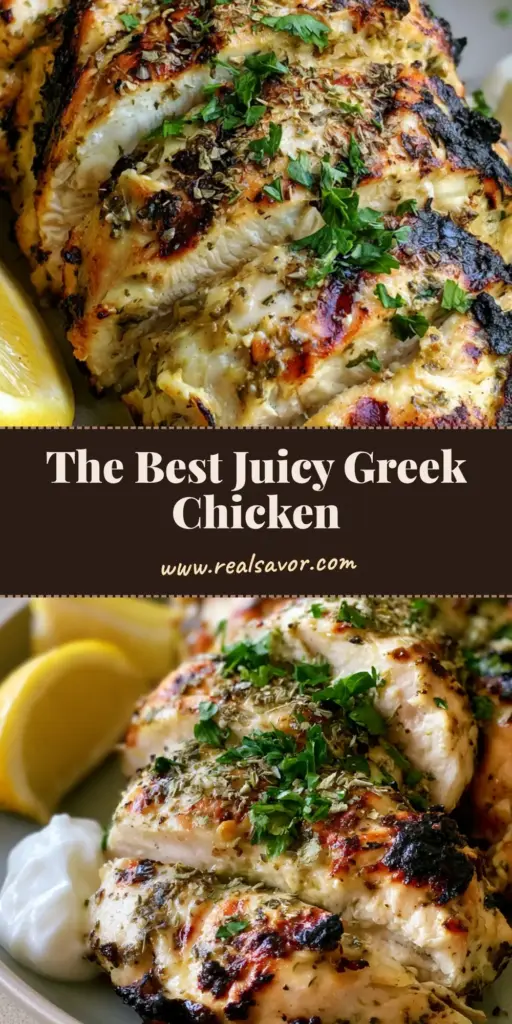
Greek Chicken Marinade: The Ultimate Guide to Perfect Mediterranean Char and Flavor
Ingredients
Equipment
Method
- Whisk olive oil, lemon juice, zest, oregano, garlic, salt, and pepper in a bowl.
- Pound chicken breasts to 3/4 inch (2cm) thickness and coat thoroughly in marinade for 30 minutes to 4 hours.
- Heat grill pan over medium-high heat. Sear chicken for 5-6 minutes per side until golden-brown with dark charred edges.
- Rest meat for 5 minutes, slice on a diagonal, and garnish with fresh parsley, lemon wedges, and a dollop of Greek yogurt sauce.
Notes
Do not over-marinate past 4 hours as the lemon juice will break down the fibers too much.
Closing Thoughts on This Mediterranean Classic
Mastering the Greek Chicken Marinade is a gateway to effortless, healthy, and visually stunning meals. The combination of the charred grill marks, the aromatic herbs, and the cooling yogurt sauce creates a sensory experience that is hard to beat.
We invite you to try this recipe and share your results! If you enjoyed this guide, please leave a comment below and let us know your favorite way to serve Mediterranean chicken. Don’t forget to follow us on Pinterest for more culinary inspiration and visual recipe blueprints.