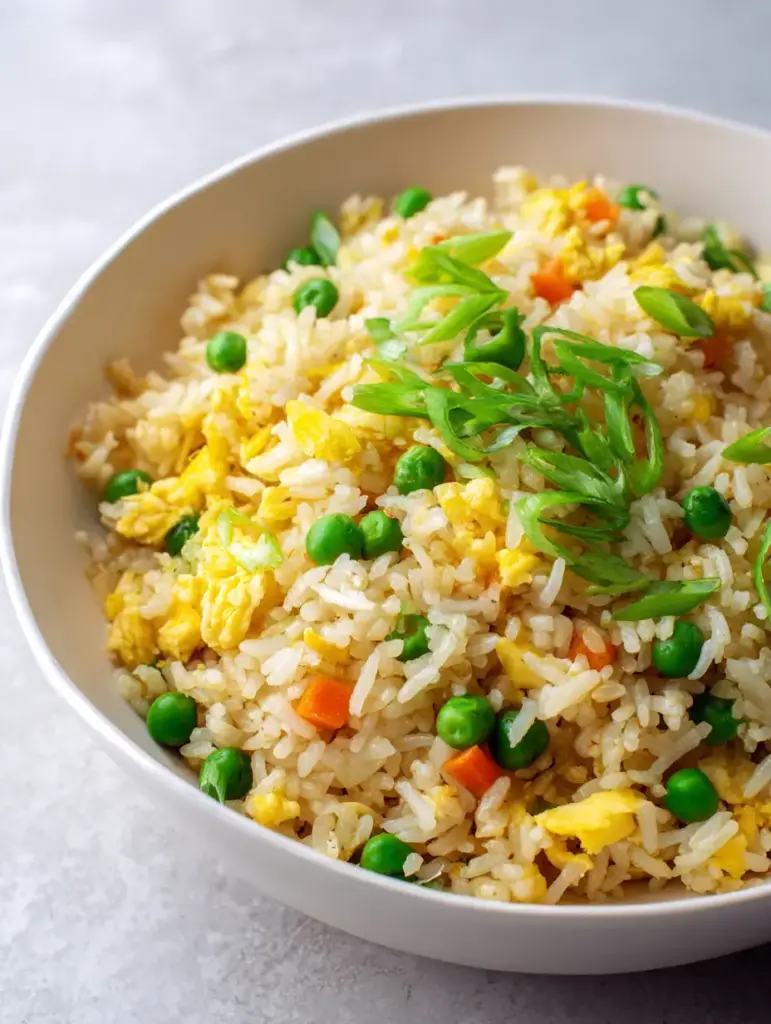
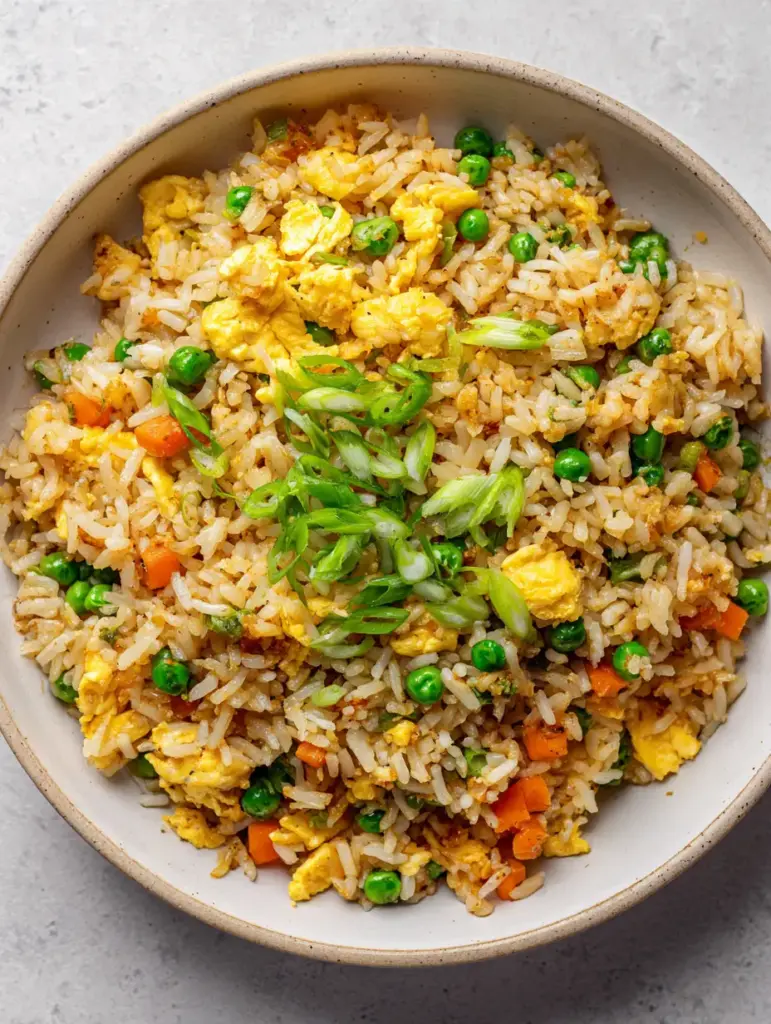
There is a specific, undeniable magic in a bowl of perfectly executed Egg Fried Rice. It’s the way the individual grains of long-grain rice separate effortlessly, each one wearing a light golden-brown coat of soy-seasoned perfection. When you look closely, you see the glistening sheen of high-quality vegetable oil catching the light, promising a texture that is neither mushy nor dry, but tender and distinct.
For the enthusiastic home cook, recreating that “wok-fired” visual—where bright yellow egg clusters pop against vibrant green peas and softened orange carrots—can feel like a professional secret. In this guide, we are deconstructing the culinary science behind those fluffy scrambled eggs and the thinly sliced fresh scallions that provide that final aromatic bite. Whether you are looking for a quick weeknight savior or the perfect companion to a hearty ginger lime pork (coming soon) dinner, this recipe is your masterclass in texture and flavor.
Why This Specific Egg Fried Rice Method Works Every Time
- Individual Grain Integrity: By using chilled, long-grain rice, we ensure each grain stays separate and develops a light golden-brown soy seasoning rather than clumping.
- The Scrambled Cluster Technique: Instead of “coating” the rice in raw egg, we create fluffy, bright yellow scrambled egg clusters that provide a distinct textural contrast.
- Balanced Visual Vibrancy: The combination of tiny cubes of softened orange carrots and steamed green peas offers a professional, colorful aesthetic seen in the best kitchens.
- Aromatic Depth: Using both the white stalks and green tops of fresh scallions ensures a layered onion flavor that permeates the oil and garnishes the final dish.
The Anatomy of Glistening, Golden-Brown Rice: Essential Ingredients
Long-Grain White Rice: You will need 4 cups (approx. 600g) of cooked, chilled rice. Long-grain varieties like Jasmine are preferred because they contain less amylopectin, preventing the rice from becoming a sticky mass when fried.
Large Farm-Fresh Eggs: 3 large (150g) eggs are the heart of this dish. They provide those fluffy pieces of bright yellow scrambled egg that act as a protein-rich “treasure” scattered throughout the bowl.
Diced Softened Carrots: 1/2 cup (75g) of tiny orange cubes. Carrots provide a subtle sweetness and a firm-yet-softened bite that complements the tender rice grains.
Steamed Green Peas: 1/2 cup (75g) of vibrant green peas. These add a pop of color and a burst of freshness that balances the savory depth of the soy sauce.
Light Vegetable Oil: 3 tbsp (45ml) of a high-smoke-point oil. This is the secret to that slight glistening sheen and prevents the ingredients from sticking to the pan at high heat.
Soy Sauce Seasoning: 2 tbsp (30ml) of light soy sauce. This provides the primary seasoning and gives the rice its characteristic light golden-brown hue without overpowering the other delicate flavors.
Fresh Scallions: 3-4 medium stalks (30g), thinly sliced. We separate the white stalks for frying and the green tops for a fresh, raw garnish.
The “Invisible” Essentials: 1/2 tsp (3g) of fine sea salt and 1/4 tsp (1g) of ground white pepper. These foundational seasonings enhance the natural flavors of the egg and vegetables without altering the visual blueprint.
The Tools You Need for Wok-Style Success
To achieve the visual result described in our blueprint—specifically the individually coated grains and seared vegetables—the equipment you use matters as much as the heat. While a traditional carbon steel wok is the gold standard for “wok hei” (the breath of the wok), a large, heavy-bottomed cast iron or stainless steel skillet is an excellent substitute for home stoves.
A wide surface area is critical. If the pan is too small, the rice will steam rather than fry, leading to a loss of that glistening sheen and the desired “light golden-brown” color. You will also need a sturdy spatula (preferably metal if using a wok) to toss the ingredients rapidly, ensuring even distribution of the soy seasoning.
Mastering the Heat: A Step-by-Step Visual Guide
Phase 1: Prepping the Aromatics and Vegetables
Begin by dicing your carrots into tiny, uniform cubes (about 1/4 inch or 6mm). If you aren’t serving this with something juicy like slow cooker beef brisket, you want these carrots to be the star texture. Steam the peas and carrots briefly for 2-3 minutes until just softened but still vibrant in color.
Slice the scallions thinly. Keep the white bases in one pile—these will be used to flavor the oil—and the bright green tops in another for the final garnish. This separation is key to achieving that professional look seen in handheld smartphone food photography.
Phase 2: Creating the Fluffy Egg Clusters
Heat 1 tbsp (15ml) of vegetable oil in your pan over medium-high heat. Whisk your eggs with a pinch of salt. Pour them into the hot oil; they should sizzle immediately. Use your spatula to gently push the cooked edges toward the center, creating large, fluffy bright yellow scrambled egg clusters.
Remove the eggs from the pan while they are still slightly moist. They will continue to cook from residual heat. Setting them aside now ensures they remain tender and don’t turn into small, dry bits during the high-heat rice phase.
Phase 3: Frying the Rice and Soy Seasoning
Wipe your pan and add the remaining 2 tbsp (30ml) of oil. Turn the heat to high. Add the white scallion stalks and stir for 30 seconds until fragrant. Add the chilled long-grain rice, breaking up any large clumps with the back of your spoon.
Drizzle the soy sauce over the rice. Toss constantly for 3-4 minutes. You are looking for the rice grains to become individually coated in a light golden-brown seasoning. Each grain should have a slight glistening sheen from the oil, catching the soft natural daylight in your kitchen.
Phase 4: The Final Integration
Fold in the softened orange carrots and green peas. Finally, return the egg clusters to the pan. Toss everything together for 60 seconds just to heat through. The heat will marry the flavors without dulling the vibrant colors of the vegetables.
Expert Tips for the Fluffiest Rice Grains
- The “Cold Rice” Rule: Never use freshly cooked rice. Fresh rice is full of moisture, which will turn your dish into a gummy mess. Chilling the rice overnight dehydrates the surface of the grain, allowing it to “fry” rather than “mush.”
- High Heat is Non-Negotiable: You want to hear the rice “pop” in the pan. This high heat creates the seared flavor and prevents the soy sauce from soaking into the center of the grain, which keeps the texture firm.
- Don’t Over-Sauce: The goal is “light golden-brown.” Adding too much soy sauce will make the dish too salty and turn the rice a muddy dark brown, ruining the visual contrast with the green peas.
- White Pepper over Black: In traditional Egg Fried Rice, white pepper is used to provide an earthy heat without the visible black specks, keeping the “clean” look of the white ceramic bowl presentation.
How to Store and Revive Your Fried Rice
If you have leftovers, they make for an incredible lunch the next day. Store the rice in an airtight container in the refrigerator for up to 3 days. To reheat, add a teaspoon of water to the bowl and cover it loosely. Microwave for 1-2 minutes or, better yet, flash-fry it in a pan with a tiny drop of oil to restore that glistening sheen.
We do not recommend freezing fried rice, as the carrots and peas can become mealy upon thawing, and the rice may lose its distinct, individual grain structure.
What to Serve with Your Egg Fried Rice
While this dish is a meal on its own, it shines as part of a larger spread. For a light, summery contrast, try serving it alongside a Mexican street corn salad for a fusion of textures. If you are looking for a protein-heavy companion, it pairs beautifully with grilled kielbasa or even a simple pan-seared chicken breast.
If you have leftover rice after making this, consider trying a different flavor profile like a Mediterranean pasta salad for your next meal prep session to keep your palate excited throughout the week.
Frequently Asked Questions
Yes, but ensure it is a long-grain variety. Brown rice takes slightly longer to fry and has a nuttier flavor, but it will still develop a nice sheen if chilled properly beforehand.
While a wok is traditional and helps with ‘wok hei,’ a large, heavy-bottomed cast iron or stainless steel skillet is a great alternative as long as you don’t crowd the pan.
The secret is to scramble the eggs separately at the beginning of the process. Cook them over medium-high heat just until set, then remove them and fold them back in at the very end to maintain their color and texture.
A neutral oil with a high smoke point is best. Vegetable, canola, or grapeseed oil work perfectly. Avoid butter or extra virgin olive oil as they burn at the temperatures required for a good sear.
Mushiness usually occurs because of two things: using freshly cooked rice which has too much moisture, or overcrowding the pan. Always use chilled, day-old rice and cook in small batches on high heat.
The Perfect Egg Fried Rice Recipe
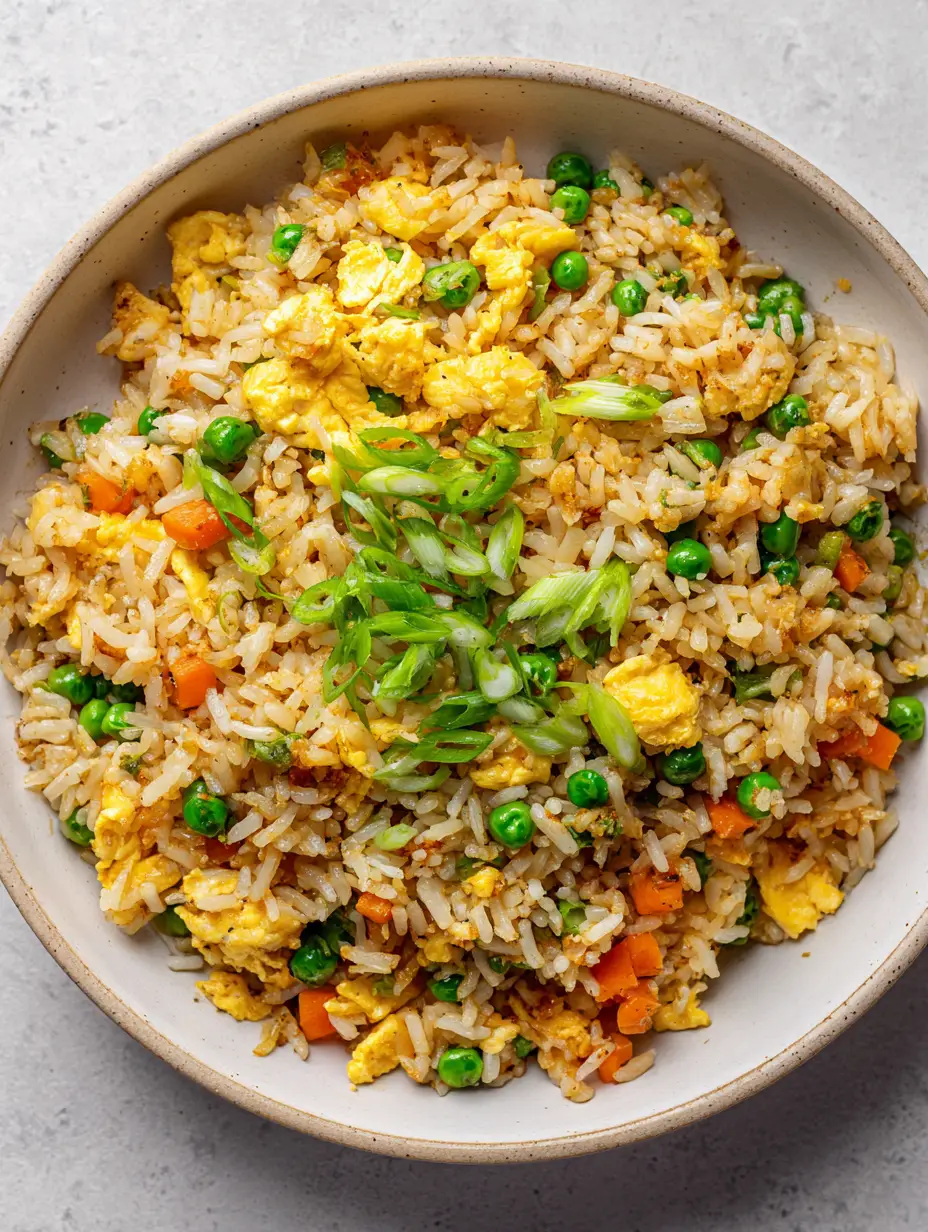
Egg Fried Rice: The Ultimate Guide to Achieving Glistening Restaurant-Quality Grains at Home
Ingredients
Equipment
Method
- Heat 1 tbsp of oil in a wok. Scramble the eggs into fluffy clusters. Remove and set aside.
- Heat remaining oil. Sauté scallion whites. Add chilled rice and toss on high heat until grains are glistening.
- Add soy sauce, carrots, and peas. Toss until rice is golden-brown. Fold in egg clusters and garnish with scallion greens.
Notes
High heat is essential for the glistening sheen and golden color.
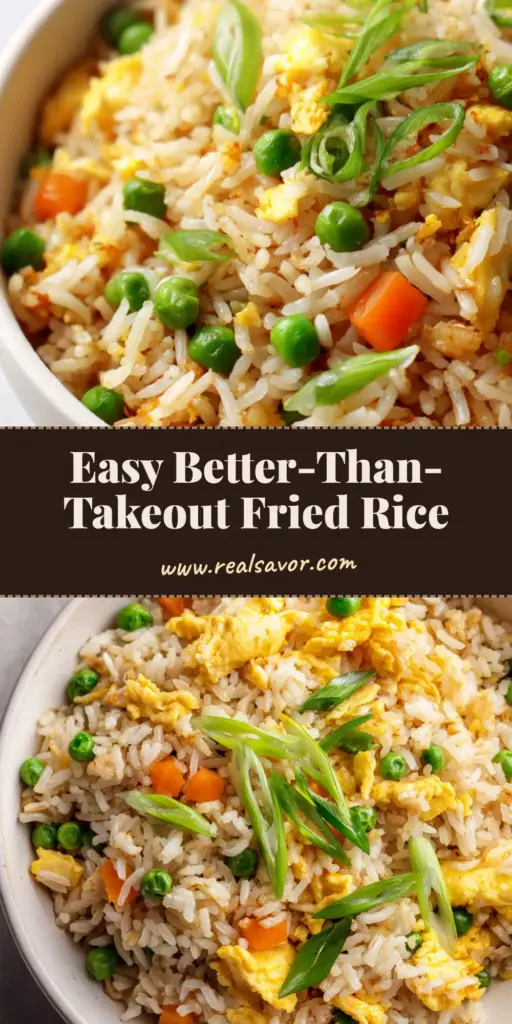
Bring the Takeout Experience Home
There is nothing quite as satisfying as mastering a classic. This Egg Fried Rice proves that with a few simple ingredients and the right technique, you can create a dish that looks as good as it tastes. The glistening soy-seasoned grains and fluffy egg clusters are a testament to the beauty of simple, high-heat cooking.
Did you try this recipe? We’d love to see your results! Leave a comment below or share your photos with us. For more culinary inspiration and visual recipe guides, be sure to follow us on Pinterest and sign up for our weekly newsletter!