Experience the sun-drenched flavors of the Mediterranean with a true Authentic Greek Salad. This isn’t your average supermarket side dish; this is the traditional Horiatiki, a rustic “village” salad that celebrates the simplicity of peak-summer produce.
Forget the wilted iceberg lettuce and the heavy bottled dressings. In Greece, a salad is a vibrant assembly of chunky vegetables, briny olives, and a massive block of feta cheese that demands to be broken apart with your fork.
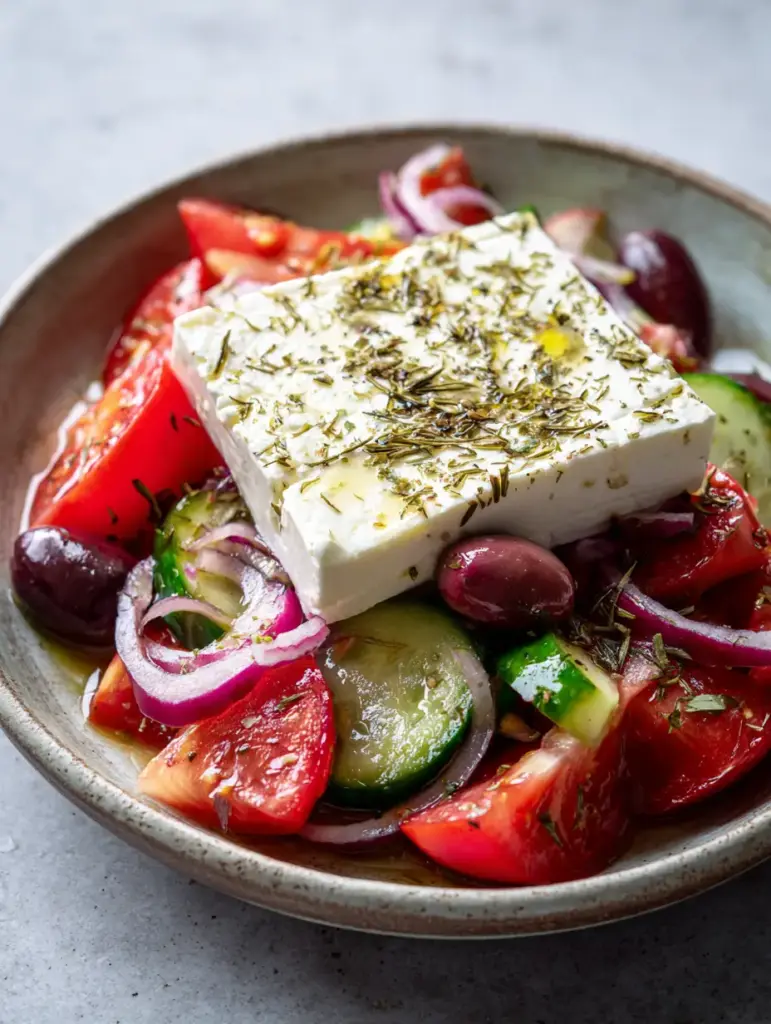
The visual appeal of this dish is undeniable, featuring irregular wedges of deep red tomatoes and thick-cut cucumbers that look as if they were just plucked from a garden in Santorini. It is a masterpiece of texture and color, glistening under a golden lake of extra virgin olive oil.
Why You Will Crave This Traditional Horiatiki Experience
- No-Lettuce Purety: This recipe honors the traditional “Horiatiki” style, which focuses entirely on the crunch of raw vegetables rather than leafy fillers.
- Bold Textural Contrast: You’ll love the interplay between the crisp cucumber chunks, the translucent red onion rings, and the creamy, solid block of feta cheese.
- Visual Masterpiece: With its heavy dusting of dried green oregano flakes and glossy purple Kalamata olives, it is a stunning centerpiece for any table.
- Five-Minute Prep: Despite its gourmet appearance, this dish relies on simple knife skills and high-quality assembly rather than complex cooking techniques.
The Essential Ingredients for an Authentic Greek Salad
To achieve the “Culinary Forensics” accuracy of a true Greek village salad, each ingredient must be selected for its specific visual and flavor profile. There is no room for substitutions when you want the real deal.
Vibrant Red Tomatoes: Use 4 large, ripe tomatoes (approx. 600g). You want to cut these into irregular, chunky wedges to catch the olive oil in their crevices.
Thick-Cut Cucumbers: One large English cucumber (approx. 300g) is required. Partially peel the skin in strips to create a “striped” visual effect before slicing into thick, heavy chunks.
Translucent Red Onion Rings: One small red onion (approx. 100g) should be sliced into paper-thin, translucent rings to provide a sharp bite without overpowering the palate.
Whole Kalamata Olives: Include 1/2 cup (75g) of whole, glossy dark purple Kalamata olives. In Greece, olives are served whole to preserve their structural integrity and juices.
The Solid Feta Block: You need one 7oz (200g) rectangular block of high-quality sheep’s milk feta cheese. Never crumble the cheese beforehand; the block is the visual hallmark of authenticity.
Extra Virgin Olive Oil: Use 1/4 cup (60ml) of the highest quality “liquid gold” you can find. This creates the characteristic glisten seen in professional food photography.
Dried Oregano Flakes: Use 1 tbsp (2g) of dried Greek oregano. This provides the “heavy dusting” of green aromatics that defines the dish’s scent profile.
Foundational Seasonings: Use 1/2 tsp (3g) of flaky sea salt and 1 tbsp (15ml) of red wine vinegar. These “invisible” ingredients are scientifically necessary to draw out the tomato juices and balance the fats.
Professional Tools for Perfect Salad Prep
Achieving the rustic yet refined look of an Authentic Greek Salad requires a few specific kitchen essentials. You don’t need a stove, but you do need precision.
First, a Chef’s Knife is non-negotiable for creating those irregular tomato wedges and thick cucumber chunks. A dull blade will bruise the tomatoes instead of slicing them cleanly.
Second, a Mandoline Slicer is highly recommended for the red onion. This allows you to achieve the translucent, thin rings that look professional and provide a delicate texture.
Finally, a Shallow Rustic Ceramic Bowl is the preferred vessel for plating. This wide surface area ensures the oil and oregano are distributed evenly across every component.
Master the Art of the Traditional Greek Salad
Step 1: Preparing the Vegetable Foundation
Begin by washing your produce in cold water and drying thoroughly. Take your tomatoes and slice them into irregular, chunky wedges; do not aim for symmetry, as the rustic charm lies in the variation.
For the cucumber, use a peeler to remove strips of skin lengthwise, leaving a striped pattern. Slice the cucumber into thick rounds, then halve those rounds into substantial chunks that can stand up to the weight of the feta.
Step 2: Creating the Onion and Olive Layer
Using your mandoline or a very sharp knife, slice the red onion into paper-thin rings. If the onion is particularly sharp, you can soak the rings in ice water for 5 minutes, though for a truly Authentic Greek Salad, the raw bite is usually preferred.
Scatter the onion rings over the tomato and cucumber base. Add the whole Kalamata olives, ensuring they are distributed evenly so their glossy purple skins contrast against the red and green.
Step 3: The Feta and Finishing Drizzle
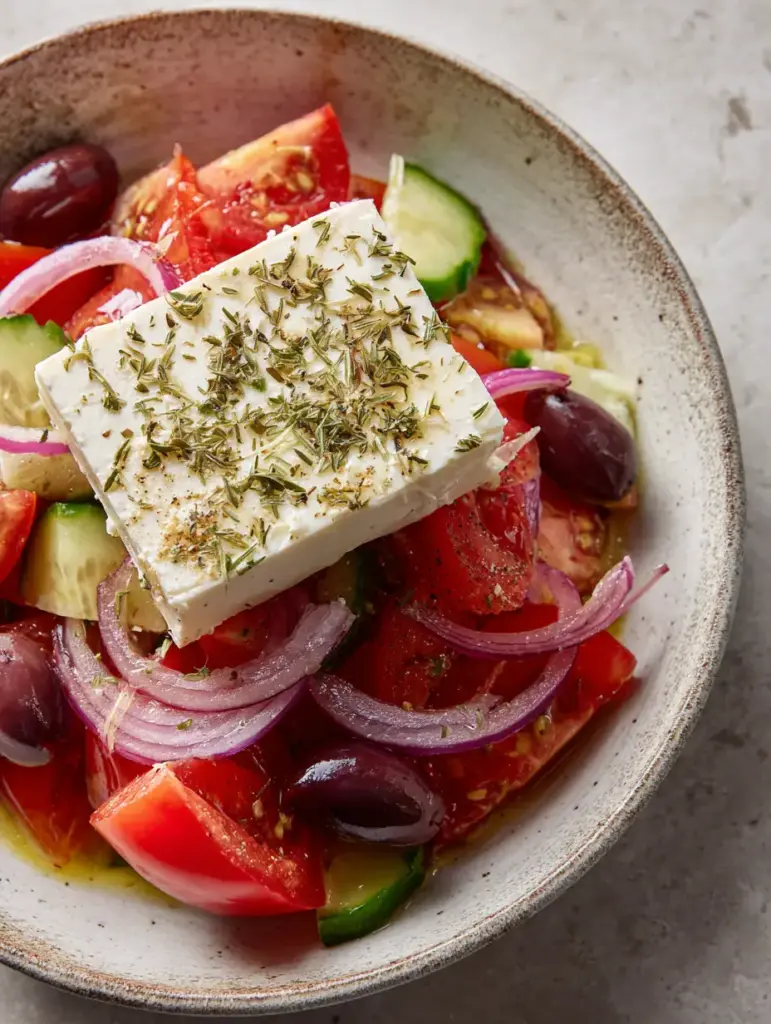
Place the solid rectangular block of feta cheese directly in the center of the assembly. This is the “prominent” visual anchor of the dish.
Drizzle the extra virgin olive oil over the entire bowl, ensuring it coats the vegetables and the cheese. Follow with the red wine vinegar and a pinch of flaky sea salt. Finish with a heavy, generous dusting of dried oregano flakes over the top of the feta and vegetables.
Culinary Secrets for the Best Horiatiki Result
- Temperature Matters: Serve the salad at room temperature. Cold tomatoes lose their aromatic compounds, and the olive oil can solidify if chilled.
- Quality of Feta: Look for feta stored in brine. It should be creamy and slightly tangy, not dry or rubbery.
- The “Dunking” Juice: The best part of an Authentic Greek Salad is the “papara”—the mixture of olive oil and tomato juice at the bottom. Always serve with crusty bread!
- Olive Integrity: Avoid pitted or sliced olives. The pit adds flavor and keeps the olive firm, which is essential for the visual blueprint.
Preserving the Freshness of Your Greek Salad
Because of the high salt content and the watery nature of tomatoes, this salad is best enjoyed immediately after assembly. However, if you have leftovers, they can be stored in an airtight container in the refrigerator for up to 24 hours.
Be aware that the cucumbers will lose their crunch and the onions will become softer. We do not recommend freezing this salad, as the cellular structure of the raw vegetables will collapse upon thawing.
Creating the Perfect Mediterranean Feast
While this Authentic Greek Salad is a meal in itself, it shines brightest when paired with other Mediterranean classics. It provides a crisp, acidic balance to heavier grilled meats.
If you are planning a themed dinner, consider serving this alongside Greek chicken gyros for a protein-packed feast. The acidity of the tomatoes cuts through the richness of the meat perfectly.
For those who love a variety of textures, you might also enjoy comparing this to a mediterranean pasta salad or even a bright Mexican street corn salad for a fusion-style potluck.
If you have leftover feta, it works beautifully in a chicken zucchini bake, adding a salty punch to the roasted vegetables.
Solving Common Greek Salad Dilemmas
Is there a right way to eat the feta block? Should you use balsamic vinegar? We answer the most common questions below.
Yes, in a truly traditional Horiatiki, whole Kalamata olives with the pits are used. This keeps the olives firm and prevents them from becoming too salty.
While you can, it isn’t traditional. Red wine vinegar provides a sharp, clean acidity that complements the tomatoes without the sweetness or dark color of balsamic.
It is traditional to partially peel the cucumber, leaving ‘stripes’ of skin. This provides a nice visual contrast and just the right amount of texture.
Serving feta as a solid rectangular block is the authentic Greek way. It prevents the cheese from dissolving into the dressing, allowing diners to break off as much as they want with each bite.
Traditional Greek Horiatiki, or village salad, never contains lettuce. It is designed to showcase the crunch of summer vegetables and the richness of feta and olive oil.
The Full Recipe: How to Make Authentic Greek Salad
Authentic Greek Salad (Horiatiki): The Ultimate Traditional Recipe
Ingredients
Equipment
Method
- Wash and dry the produce. Cut tomatoes into irregular, chunky wedges. Partially peel the cucumber to create a striped look, then slice into thick chunks.
- Place tomatoes and cucumbers in a shallow bowl. Top with thin red onion rings and whole Kalamata olives.
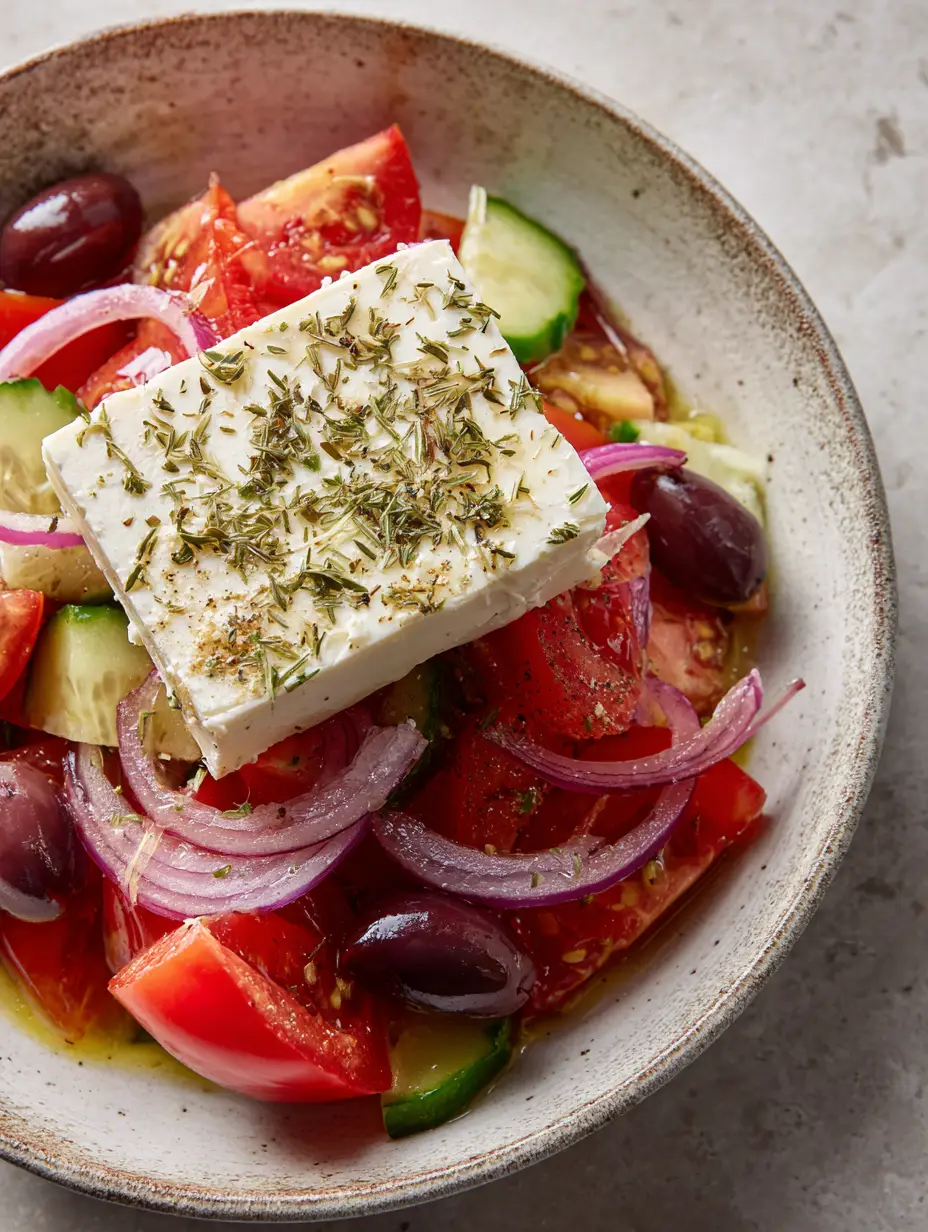
- Place the whole block of feta on top. Drizzle generously with olive oil and vinegar. Sprinkle with sea salt and a heavy dusting of dried oregano.
Notes
Serve at room temperature to allow the flavors of the tomatoes and oil to shine.
Closing & Call to Action
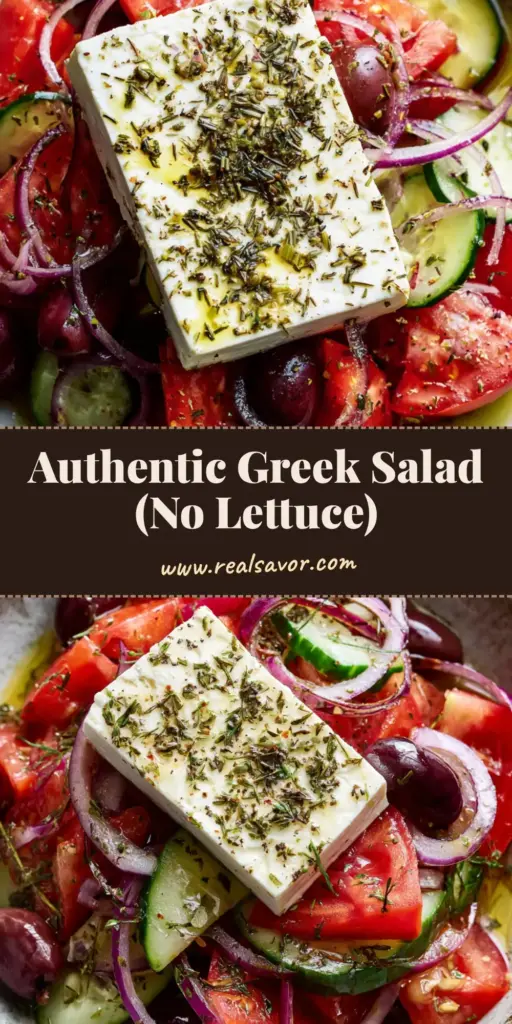
This Authentic Greek Salad is more than just a recipe; it’s a tribute to the simplicity of high-quality ingredients. Whether you’re serving it at a summer BBQ or enjoying a quiet lunch, its vibrant colors and bold flavors are sure to impress.
Did you make this recipe? I’d love to hear your thoughts! Leave a comment below and let me know how your Horiatiki turned out. Don’t forget to follow us on Pinterest for more Mediterranean inspiration!