There is a specific, fleeting magic that happens when the first stalks of spring rhubarb hit the kitchen counter. These Rhubarb Galettes capture that seasonal transition perfectly, balancing the aggressive tartness of the fruit with a buttery, shatteringly flaky pastry.
Unlike a traditional pie that requires precise crimping and deep-dish patience, these mini galettes celebrate the “ugly-delicious” aesthetic. We are aiming for a handheld, rustic look that feels right at home on a minimalist linen tablecloth.
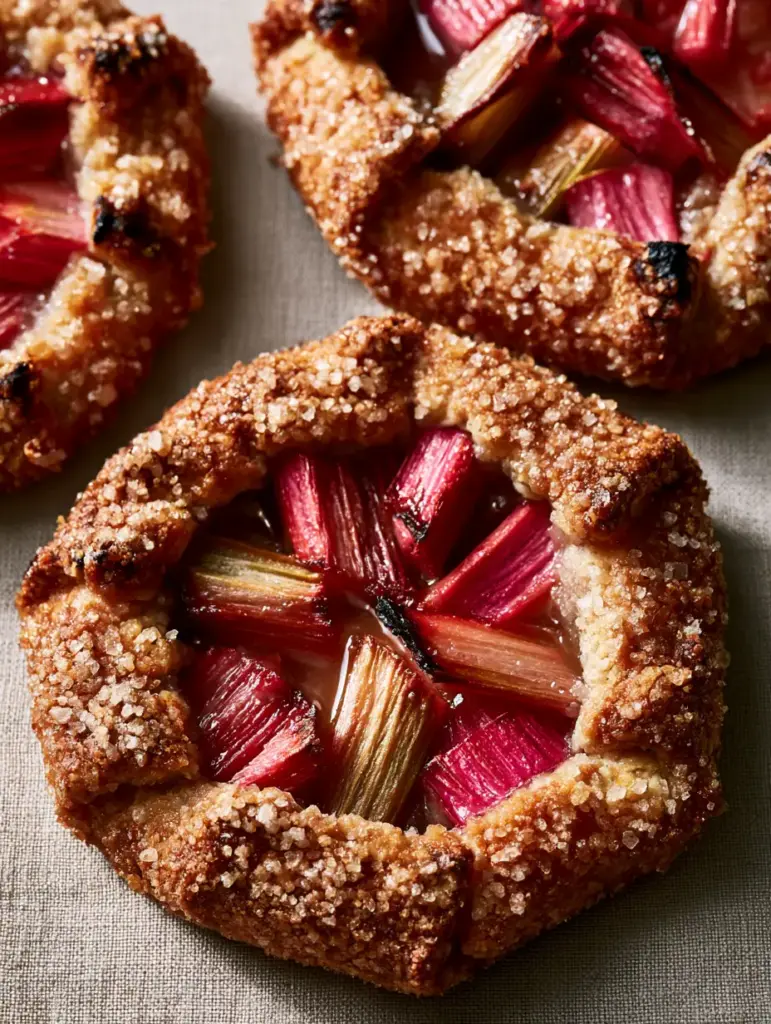
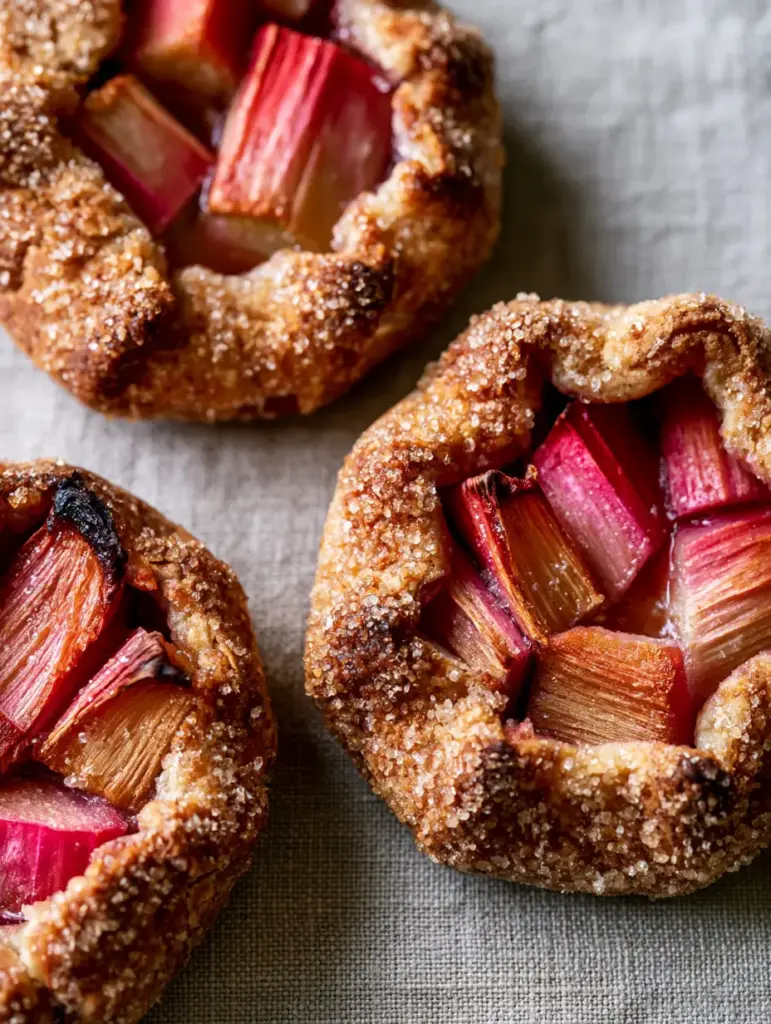
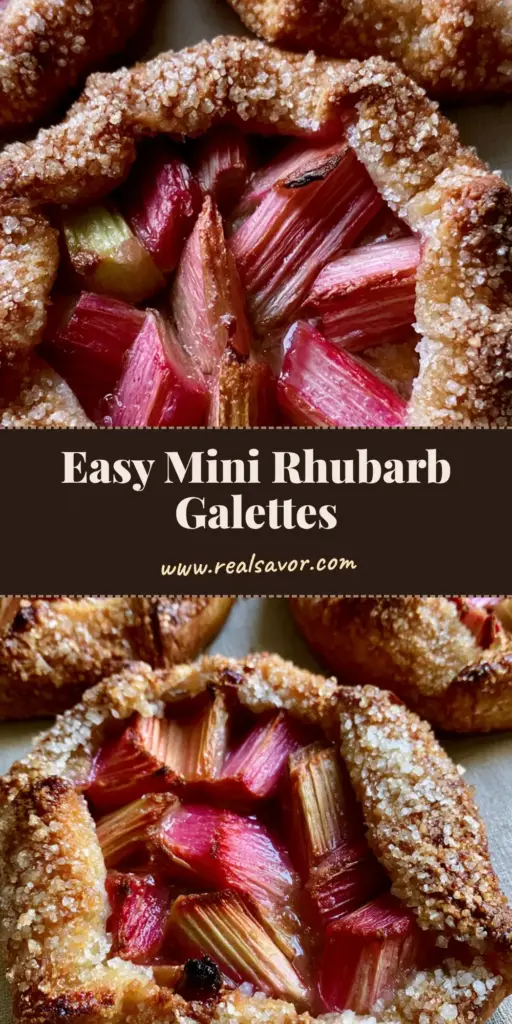
By using a high-heat baking method, we achieve those characteristic charred edges on the rhubarb while the turbinado sugar melts into a crunchy, crystalized armor. The result is a vibrant pink dessert that glistens under natural daylight.
The Irresistible Allure of These Handheld Spring Treats
- Shatteringly Flaky Texture: A high-butter-content crust that mimics the layers of a croissant with half the effort.
- Perfectly Balanced Tartness: We use fresh, diagonally sliced rhubarb segments that retain their structural integrity and vibrant red hue.
- The “Golden Hour” Crunch: A heavy coating of coarse turbinado sugar crystals provides a deep caramel flavor and essential crunch.
- Glistening Finish: A light fruit glaze applied post-bake ensures the rhubarb looks as juicy as it tastes.
Pantry Essentials for the Ultimate Flaky Galette Crust
All-Purpose Flour (315g / 2 ½ cups): This provides the structural foundation. I prefer a mid-range protein content to ensure the crust is sturdy enough to hold the fruit but tender enough to melt in your mouth.
Unsalted European-Style Butter (225g / 1 cup): Use butter with at least 82% butterfat. Cold, cubed butter is the “invisible” engine that creates steam pockets, leading to that sought-after golden-brown pastry crust.
Ice-Cold Water (60ml – 120ml / ¼ to ½ cup): The temperature is non-negotiable. Cold water prevents the butter from melting before it hits the oven, which is the secret to a professional-grade flaky texture.
Granulated Sugar (25g / 2 tbsp): Just a touch in the dough to encourage browning. For a different profile in your baking repertoire, you might compare this to the sweetness in a Neapolitan Layer Cake (coming soon).
The Star Ingredient: Fresh Spring Rhubarb
Fresh Rhubarb Stalks (450g / 1 lb): Look for firm, bright red stalks. The color doesn’t necessarily indicate sweetness, but it provides that stunning pink and red visual contrast in the finished galette.
Cornstarch (10g / 1 tbsp): This acts as a thickener. It binds the natural juices released by the rhubarb segments as they soften, preventing a “soggy bottom” on your pastry.
Turbinado Sugar (50g / ¼ cup): Also known as sugar in the raw. These large, golden crystals won’t fully melt in the oven, giving you that heavily encrusted, professional finish.
Apricot Preserves (30ml / 2 tbsp): Warmed and strained, this creates the light fruit glaze. It adds a professional “bakery shine” and a hint of floral sweetness to the tart fruit.
Essential Tools for Hand-Folded Success
To achieve the minimalist, unedited kitchen aesthetic, you don’t need fancy molds. A heavy-duty baking sheet and a sharp chef’s knife are your best friends here. A pastry blender or even just your fingertips will work to incorporate the butter.
Using a bench scraper helps keep the dough cool by minimizing hand contact. If you’re used to making hearty breads or Butter Swim Biscuits, you’ll find this pastry dough requires a much lighter, more delicate touch.
Mastering the Art of the Rustic Fold
Crafting the Flaky Pastry Foundation
Start by whisking your dry ingredients in a chilled bowl. Work the cold, cubed butter into the flour until you have pieces ranging from the size of peas to walnut halves; these larger chunks of butter are what create the flakes.
Slowly drizzle in the ice water, tossing with a fork until the dough just barely holds together when squeezed. Wrap the dough tightly and chill for at least one hour—this allows the gluten to relax and the flour to fully hydrate.
Preparing the Vibrant Rhubarb Filling
Wash your rhubarb stalks and pat them completely dry. Slice the rhubarb diagonally into 1-inch (2.5cm) segments. Slicing on the bias creates more surface area for the light syrup to cling to and looks much more sophisticated than simple rounds.
Toss the segments with granulated sugar and cornstarch. Do this just before assembly to prevent the fruit from releasing too much liquid too early, which ensures the rhubarb stays tightly packed and slightly softened rather than mushy.
Assembling the Mini Galettes
Divide your chilled dough into three equal portions. Roll each out on a lightly floured surface into a rough 7-inch (18cm) circle. Don’t worry about perfect edges; the beauty of Rhubarb Galettes lies in their rustic, hand-folded charm.
Arrange the rhubarb segments in the center, leaving a 1.5-inch (4cm) border. Fold the edges of the pastry up and over the fruit, pleating the dough as you go. The center should remain open, showcasing the tightly packed, vibrant pink fruit.
The Secret to the Sparkling Golden Crust
Brush the folded pastry edges generously with an egg wash (one egg beaten with a splash of water). This acts as the “glue” for our turbinado sugar. Press the coarse sugar crystals into the dough firmly.
Bake at 400°F (200°C) until the crust is a deep golden-brown and the rhubarb is bubbling and showing slight charring at the edges. This high heat is crucial for that “charred” visual cue from our blueprint.
Expert Tips for Bakery-Quality Results
- Keep it Cold: If the dough feels soft or greasy at any point, pop it in the freezer for 5 minutes. Cold fat equals a flaky crust.
- The Glaze Trick: Apply the strained apricot preserves while the galettes are still warm. The heat helps the glaze set into a thin, glistening layer.
- Avoid Overcrowding: Bake the three mini galettes with plenty of space between them to allow the hot air to circulate, ensuring the sides get crispy.
- Visual Cues: Look for the rhubarb to “slump” slightly and the crust to sound hollow when tapped. This indicates the internal moisture has evaporated correctly.
The Best Ways to Store and Reheat Your Galettes
These are best enjoyed the day they are made, especially while the pastry is at its peak crispness. However, you can store leftovers in an airtight container at room temperature for up to 2 days.
To regain that “freshly baked” texture, avoid the microwave. Instead, reheat in a 350°F (175°C) oven for 5-8 minutes until the crust crisps back up and the turbinado sugar sparkles again.
Seasonal Pairings and Serving Suggestions
These tarts are a star on their own, but they also make a fantastic conclusion to a spring-themed lunch. They pair beautifully with a light, crunchy salad like a Homemade Coleslaw Recipe or a fresh garden mix.
For a more decadent dessert experience, serve a warm galette with a scoop of honey-vanilla bean ice cream. The cold cream melting into the charred rhubarb segments creates a “light syrup” effect that is truly world-class.
Answers to Your Common Galette Questions
Yes, but thaw it completely and pat it very dry first. You may need to add an extra teaspoon of cornstarch to absorb the additional moisture released by frozen fruit.
No, peeling is not necessary and would actually remove the vibrant red skin that gives these galettes their beautiful pink color.
The secret is a light fruit glaze. Warm some apricot or strawberry preserves, strain out the bits, and brush it over the warm rhubarb immediately after baking.
Turbinado is a coarse, raw cane sugar that provides a distinct crunch. You can substitute it with Demerara sugar or sparkling sanding sugar for a similar effect.
This usually happens if the oven wasn’t hot enough or if the fruit was too wet. Ensure you bake at 400°F (200°C) and use cornstarch to bind the juices.
Rhubarb Galettes: The Official Recipe
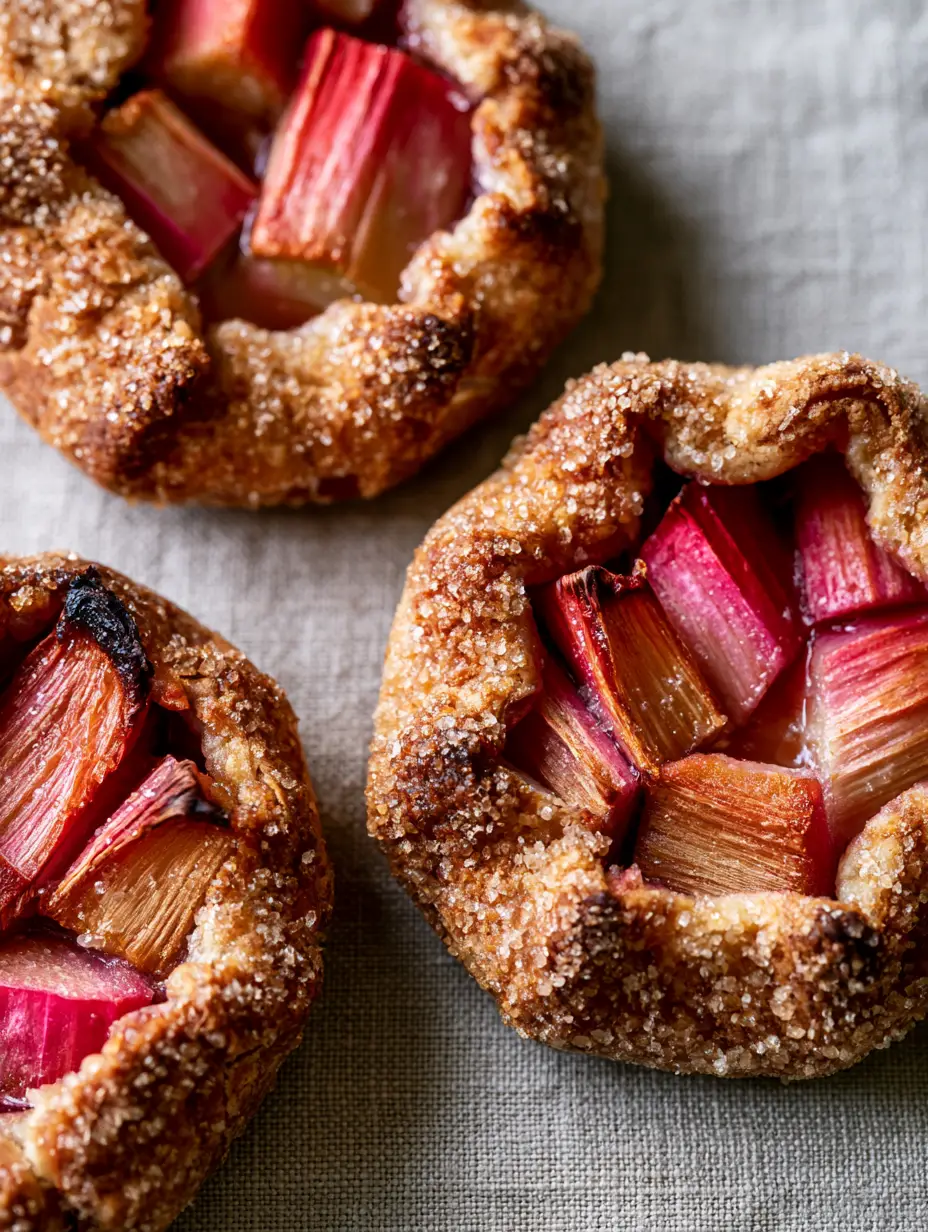
Rhubarb Galettes: Rustic Hand-Folded Mini Tarts with a Sparkling Turbinado Crust
Ingredients
Equipment
Method
- In a large bowl, whisk flour, sugar, and salt. Cut in the cold butter with a pastry blender or fingertips until pieces are the size of peas.
- Add ice water 1 tablespoon at a time, tossing with a fork until the dough just begins to clump together. Wrap and chill for 60 minutes.
- Slice fresh rhubarb stalks diagonally into 1-inch segments. Toss with 1/3 cup sugar and cornstarch.
- Divide dough into 3 balls. Roll each into a 7-inch circle. Place rhubarb segments in the center, leaving a border.
- Hand-fold the edges over the rhubarb, pleating the dough to create a rustic, circular shape.
- Brush edges with egg wash and press coarse turbinado sugar crystals heavily into the pastry crust.
- Bake at 400°F (200°C) for 22-25 minutes until crust is golden-brown and rhubarb shows slight charring.
- While warm, brush the softened rhubarb with strained apricot preserves for a glistening light fruit glaze.
Notes
For a vibrant red look, choose the thinnest, reddest rhubarb stalks available in early spring.
Join Our Savor Community!
The beauty of these Rhubarb Galettes is how they bring a touch of rustic elegance to any table. Whether you are a seasoned baker or a first-timer, the hand-folded nature of this recipe ensures success every time.
Did you try the diagonal slice technique? Let us know in the comments below! We love seeing your kitchen creations. Don’t forget to share your photos and follow us on Pinterest for more seasonal inspiration.
—