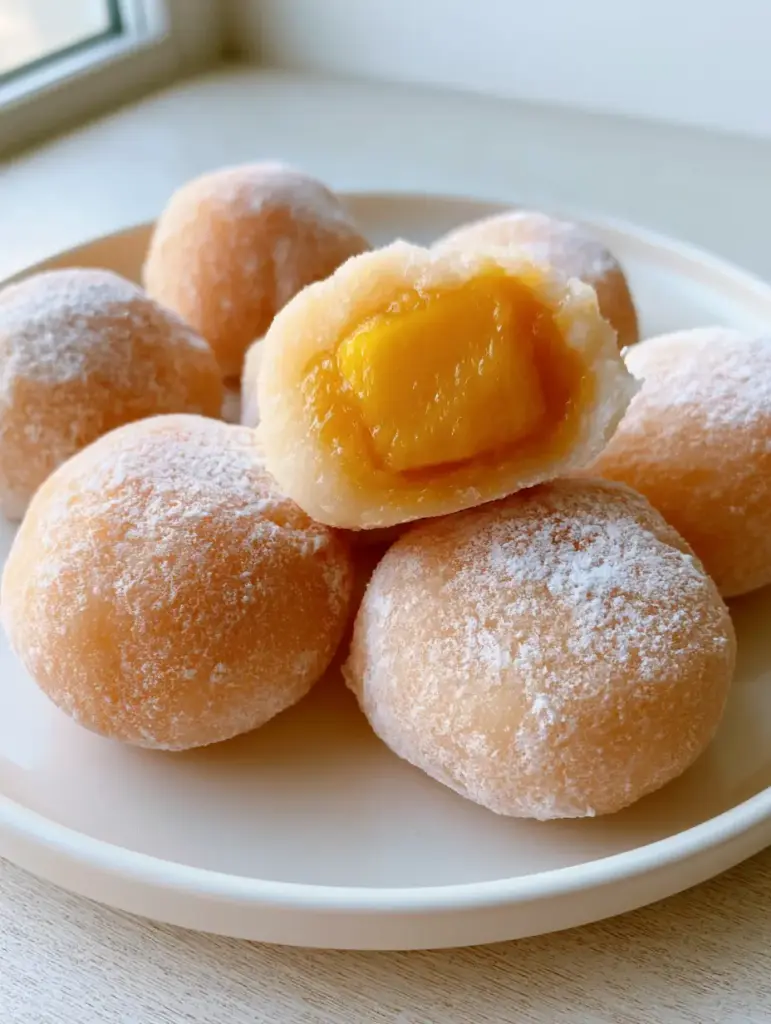
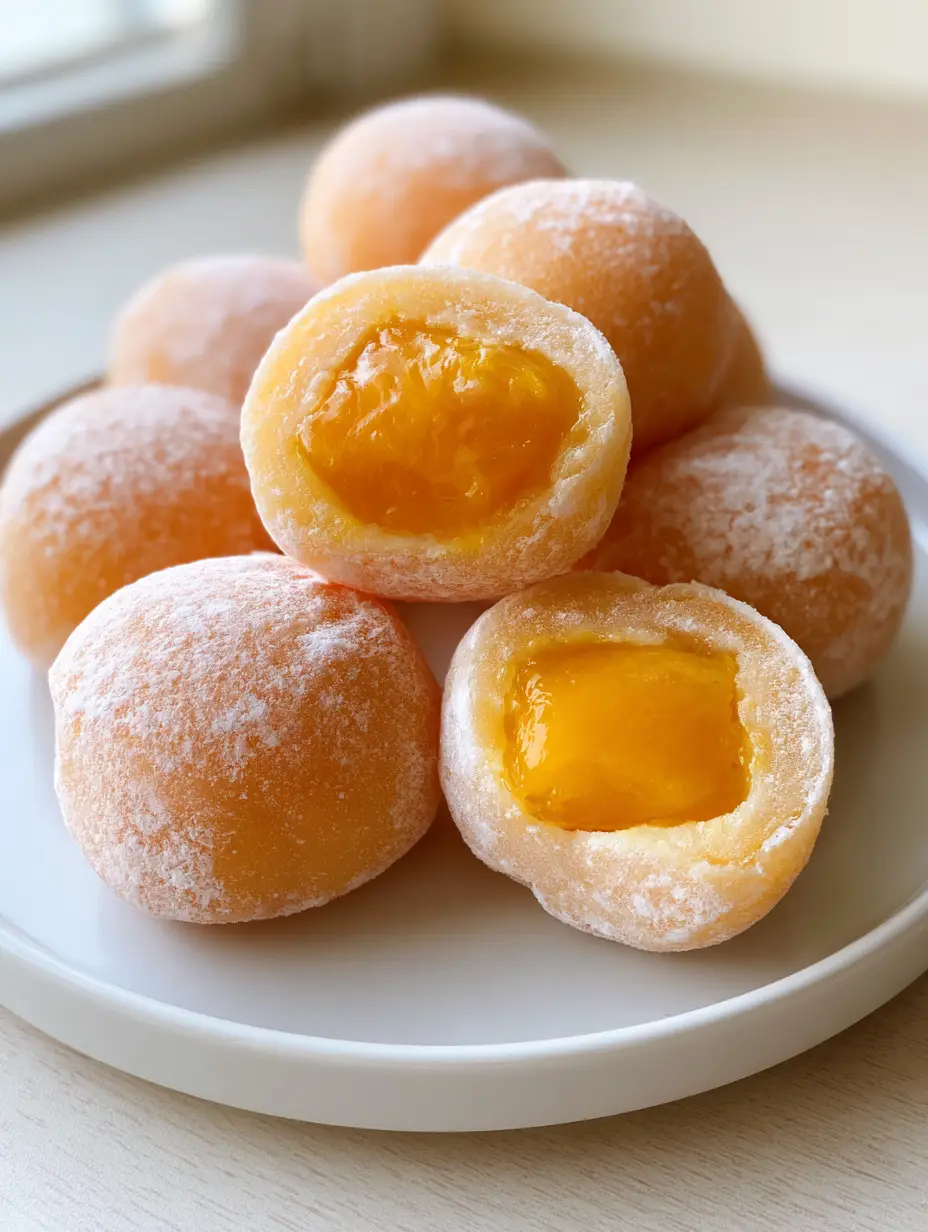
There is a specific, ethereal joy in biting into a perfectly crafted Mango Mochi. Imagine a handheld, plump sphere that yields to the slightest pressure, revealing a soft, elastic, pale-orange outer layer that feels like a silken cloud against your palate. As your teeth sink through the matte, cornstarch-dusted exterior, you hit the jackpot: a large, vibrant, and incredibly juicy square of fresh ripe mango nestled at the very center. This isn’t just a dessert; it is a masterclass in textural contrast and tropical vibrance.
Our Mango Mochi recipe captures the authentic essence of this beloved snack, focusing on a steamed glutinous rice flour dough that achieves that elusive balance of chewiness and tenderness. By incorporating a hint of pale orange food coloring, we mirror the sun-drenched hue of the fruit inside, creating a visual harmony that looks stunning on a minimalist white ceramic plate. Whether you are a seasoned confectioner or a curious home cook, this guide provides the forensic level of detail needed to master the art of the mochi fold.
The Irresistible Allure of This Tropical Confection
- The Perfect Texture: Experience the signature “QQ” texture—a specific bouncy elasticity that only high-quality steamed glutinous rice dough can provide.
- Vibrant Visual Appeal: The soft, matte, pale-orange dough provides a modern, minimalist aesthetic that looks professional and sophisticated.
- Natural Sweetness: By using large, ripe mango cubes, we rely on nature’s candy to provide the primary flavor profile, balanced by a lightly sweetened dough.
- Handheld Elegance: These round, plump treats are designed to be enjoyed as a neat, portable snack that feels as good as it looks.
The Architecture of a Superior Mango Mochi
To achieve the visual and structural results seen in our professional food photography, we must select the right building blocks. Every ingredient serves a specific purpose in the culinary chemistry of the Mango Mochi.
Glutinous Rice Flour (Mochiko): You will need 1 ½ cups (240g) of this specific flour; unlike regular rice flour, it contains high levels of amylopectin, which creates the essential “stretchy” and “sticky” nature of the dough. Ensure you are using the “glutinous” variety, often sold in bags with green lettering, to ensure the dough remains elastic after steaming.
Granulated Sugar: 1/3 cup (65g) of sugar does more than sweeten; it acts as a tenderizer, keeping the rice starch molecules from recrystallizing and becoming hard too quickly. This ensures your Mango Mochi stays soft and supple even after a few hours on the counter.
Full-Fat Coconut Milk or Water: 1 cup (240ml) of liquid provides the hydration necessary to gelatinize the starch; coconut milk adds a subtle richness that complements the tropical mango beautifully. For a cleaner, more neutral flavor that lets the rice aroma shine, filtered water is an excellent alternative.
Pale Orange Gel Food Coloring: A single drop of high-quality gel coloring is used to tint the dough to that perfect sunset hue. We use gel rather than liquid to avoid altering the hydration levels of the dough, ensuring the elasticity remains intact.
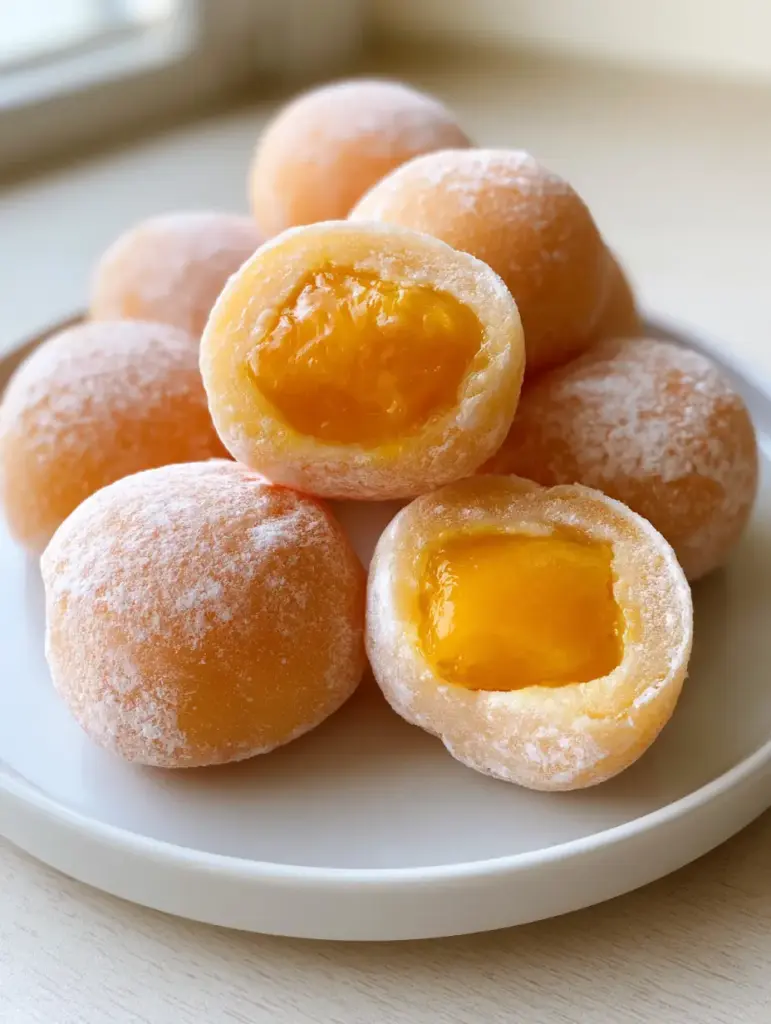
Fresh Ripe Mangoes: 2 large, firm-ripe mangoes (preferably Ataulfo or Champagne varieties) are required. These varieties have a buttery, non-fibrous texture and a vibrant orange interior that provides the “juicy square” visible in the sliced cross-section.
Fine Cornstarch: ½ cup (65g) of cornstarch is essential for the dusting process, preventing the elastic dough from sticking to your hands and the work surface. It provides that characteristic smooth, matte finish described in our visual blueprint.
Neutral Oil: 1 teaspoon (5ml) of a flavorless oil, like grapeseed or vegetable oil, added to the batter ensures the dough has a glossy sheen before steaming and remains workable once cooked.
Essential Tools for Precision Mochi Making
Achieving a smooth, matte exterior and a perfectly centered mango cube requires more than just ingredients; it requires the right equipment. You will need a heat-proof glass bowl that fits comfortably inside your steamer basket for the traditional steaming method.
A silicone spatula is indispensable here, as the dough becomes incredibly sticky as the starches hydrate. You will also want a sharp, non-serrated knife to achieve that clean, professional slice through the center of the mochi, revealing the vibrant mango heart. Finally, a fine-mesh sieve is helpful for evenly applying the cornstarch dusting across the finished rounds.
Mastering the Steam: Crafting the Elastic Dough
Preparing the Slurry
In your heat-proof bowl, whisk together the 1 ½ cups (240g) of glutinous rice flour and 1/3 cup (65g) of sugar. Gradually pour in the 1 cup (240ml) of liquid and the teaspoon of oil, whisking constantly until the mixture is completely smooth with no lumps. At this stage, add one tiny drop of pale orange gel coloring and stir thoroughly until the color is uniform and matches the soft, sun-kissed hue of a ripe mango skin.
The Steaming Process
Place the bowl in a steamer over boiling water. Cover the bowl with a clean kitchen towel or plastic wrap (pierced with a few holes) to prevent condensation from dripping into the batter. Steam for 15-20 minutes. You are looking for a specific sensory cue: the dough should transition from an opaque, milky liquid to a translucent, thick, and very sticky solid. When poked with a spatula, it should pull away from the sides in one elastic mass.
Cooling and Kneading
Once steamed, remove the bowl and let the dough cool until it is safe to handle but still quite warm. Heat is your friend when it comes to elasticity. Generously dust your work surface with the fine cornstarch. Turn the dough out onto the starch and use a bench scraper or your hands to fold it over itself a few times. This “kneading” distributes the moisture and ensures a smooth, matte texture that won’t feel grainy on the tongue.
Assembly: The Art of the Perfect Mango Wrap
Preparing the Mango Heart
While the dough cools slightly, peel your mangoes and cut the flesh into large, uniform squares, approximately 1 inch (2.5cm) in size. Pat each square dry with a paper towel; any excess moisture on the surface of the fruit will prevent the dough from sealing properly, leading to a messy final product. Aim for that “vibrant, juicy square” appearance that will anchor the center of your Mango Mochi.
Sectioning the Dough
Divide your warm dough into 8 to 10 equal portions. Keep the portions you aren’t working with covered so they stay warm and pliable. Using your palms, flatten a piece of dough into a circular disc about 3 inches in diameter. The edges should be slightly thinner than the center to avoid a thick “knot” of dough at the bottom of the mochi.
Sealing and Dusting
Place one mango cube in the center of the dough disc. Gently stretch the edges of the dough up and over the mango, pinching the seams together at the top to seal the fruit inside completely. Roll the plump sphere between your palms to smooth out any irregularities. Immediately roll the mochi in a shallow dish of cornstarch, ensuring a light and even dusting. This provides the soft, matte finish that makes the Mango Mochi look so inviting on the plate.
Expert Tips for Mochi Success
- Control the Stickiness: If the dough is sticking to everything, you need more cornstarch. However, use it sparingly on the “inside” of the dough disc where you need to pinch the seams, or the mochi won’t seal.
- Temperature Matters: Work with the dough while it is warm. Once it cools completely, it loses much of its elasticity, making it difficult to stretch over the large mango cubes without tearing.
- The Uniformity Secret: Use a kitchen scale to weigh your dough portions (approx 45-50g each) to ensure every Mango Mochi on your minimalist plate looks identical and professional.
- Fruit Dryness: As mentioned, moisture is the enemy of a good seal. If your mangoes are exceptionally juicy, a quick blot with a paper towel is the difference between a clean seal and a sliding mess.
Storage and Freshness Guidelines
Mango Mochi is best enjoyed on the day it is made, ideally within 4 to 6 hours. Because we are using fresh, high-moisture fruit inside a starch-based dough, the moisture from the mango will eventually begin to soften the dough from the inside out.
If you must store them, place the mochi in an airtight container in a single layer. Store them at cool room temperature for up to 24 hours. Avoid the refrigerator if possible, as the cold temperatures cause the glutinous rice starch to undergo retrogradation, turning the once-elastic dough firm and rubbery. If they do become slightly firm, a 5-second burst in the microwave can sometimes restore a bit of that signature chew.
Pairing Your Tropical Treats
The refreshing, sweet profile of Mango Mochi makes it a versatile dessert that pairs beautifully with a variety of meals. If you are planning a full menu, consider serving these after a savory, slightly spicy main course. The cool, creamy mango is the perfect palate cleanser after enjoying Creamy Coconut Garlic Shrimp or a zestier Ginger Lime Pork (coming soon).
For those who love a spread of various textures, these mochi sit perfectly alongside a light and refreshing Crunchy Asian Cabbage Salad. If you are hosting a larger gathering and want a variety of desserts, the vibrant orange of the mochi provides a stunning color contrast to the classic layers of a Neapolitan Layer Cake (coming soon). The goal is to balance the soft, chewy nature of the mochi with either crisp, fresh vegetables or rich, savory proteins like those found in Shrimp and Avocado Bowls.
Your Questions About Mango Mochi Answered
Yes. Mix the slurry in a microwave-safe bowl, cover with plastic wrap, and heat in 1-minute intervals, stirring in between, until the dough is translucent and elastic (usually 2-3 minutes total).
While fresh mango is preferred for its firm texture, you can use thawed frozen mango if you pat it extremely dry. However, it may be softer and harder to wrap than fresh cubes.
It is best consumed within 6 hours. After 24 hours at room temperature, the moisture from the mango begins to degrade the dough. Avoid refrigeration, as it makes the mochi hard.
You must use ‘Glutinous Rice Flour’ (like Mochiko). Regular rice flour will not produce the stretchy, elastic texture required for mochi and will result in a crumbly dough.
Mochi dough is naturally sticky. If it’s unmanageable, ensure you are using enough cornstarch on your hands and work surface, and make sure the dough was steamed long enough to fully gelatinize the starch.
The Complete Recipe: Handcrafted Mango Mochi
Mango Mochi: The Ultimate Guide to Crafting Pillowy, Tropical Homemade Treats
Ingredients
Equipment
Method
- Whisk glutinous rice flour, sugar, liquid, oil, and food coloring in a heat-proof bowl until perfectly smooth.
- Place the bowl in a steamer and steam for 15-20 minutes until the dough is translucent and elastic.
- Turn the warm dough onto a cornstarch-dusted surface and fold it briefly to create a smooth, matte finish.
- Divide dough into 10 pieces. Flatten one, place a dried mango square in the center, and pinch the edges to seal.
- Roll the finished plump spheres in cornstarch for a light, even dusting and place on a minimalist serving plate.
Notes
Always pat your mango cubes dry to ensure a clean, permanent seal with the dough.
Sharing the Joy of Tropical Mochi
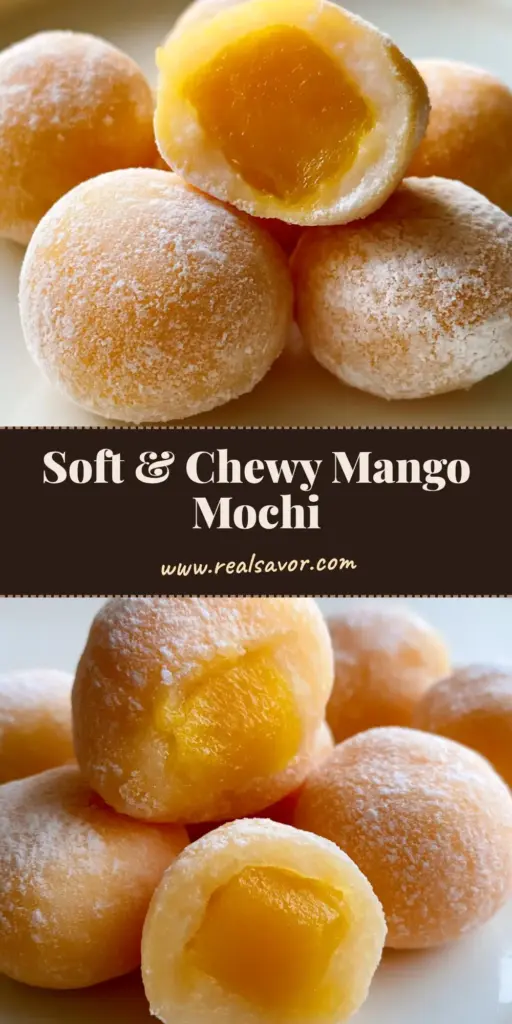
Mastering the Mango Mochi is a rewarding culinary journey that results in a dessert as beautiful as it is delicious. The combination of the soft, elastic dough and the burst of fresh fruit creates a sensory experience that is hard to match with store-bought alternatives. We hope this guide helps you create a plate of mochi that looks exactly like our sun-drenched, minimalist photography.
If you enjoyed making these, please leave a comment below and let us know how your dough turned out! Don’t forget to share your creations on social media and follow us on Pinterest for more visually-driven recipe inspiration and tropical treats. Happy steaming!