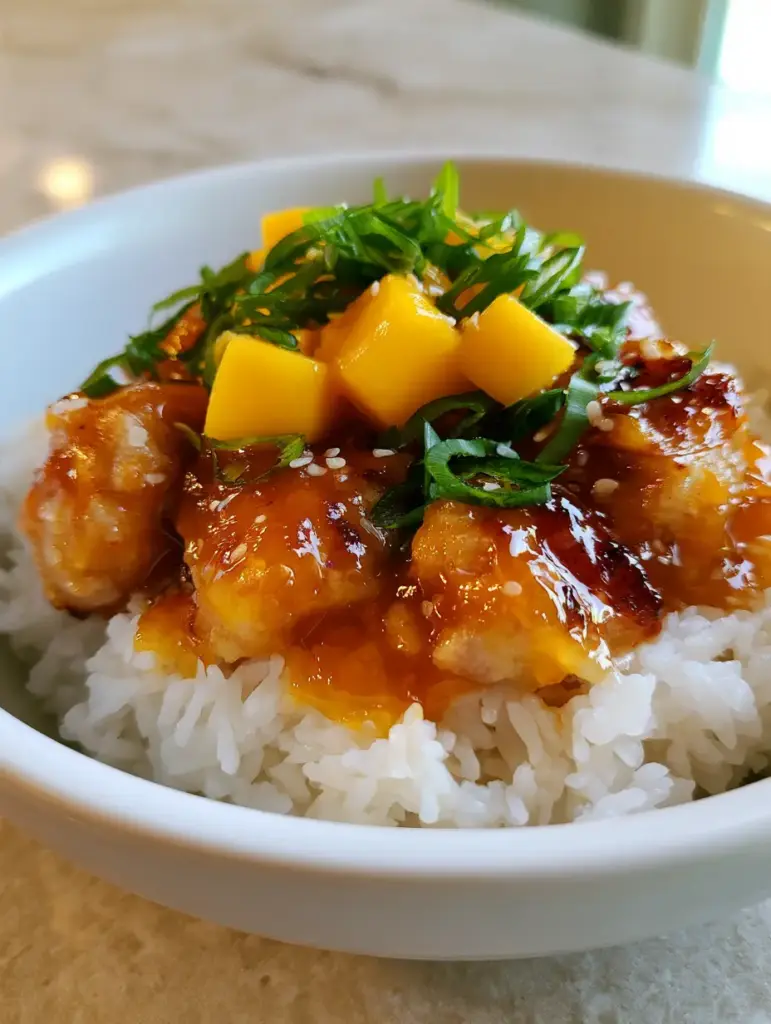
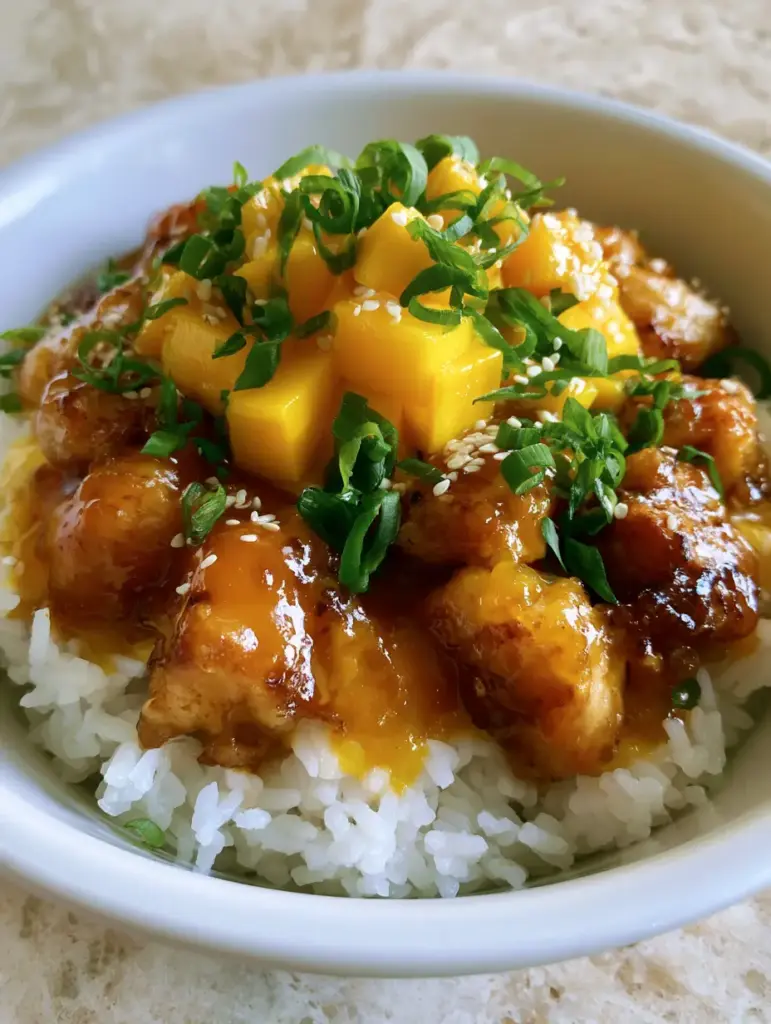
There is a specific visual magic that happens when a high-heat sear meets a vibrant, fruit-forward reduction. This Mango Glazed Chicken is the culinary embodiment of that synergy, offering a striking contrast between deeply caramelized protein and a translucent, glowing orange sauce. Every element in this bowl has been designed to satisfy both the palate and the lens, capturing that perfect “handheld smartphone” aesthetic of a fresh, homemade masterpiece.
Imagine biting into a succulent chunk of chicken that has been seared to a precise golden-brown, then enveloped in a thick, glossy glaze that clings to every corner. Paired with the floral aroma of steamed jasmine rice and the cooling burst of fresh, rectangular mango cubes, this dish is a masterclass in texture. It is a recipe that demands to be photographed before the first bite, yet it is simple enough to become a staple in your weekly rotation.
Whether you are looking for a vibrant lunch or a dinner that feels like a tropical escape, this Mango Glazed Chicken delivers professional results with accessible techniques. By focusing on the Maillard reaction for the chicken and a precise cornstarch slurry for the glaze, we achieve a level of “sauce-cling” that is usually reserved for high-end bistros. Let’s dive into the science of the sear and the secrets behind that signature high-gloss finish.
Why This Tropical Chicken Bowl Wins Every Single Time
- The High-Gloss Factor: Unlike thin, watery sauces, our glaze is reduced until it reaches a thick, translucent state that creates realistic highlights under natural light.
- Textural Contrast: We balance the soft, fluffy steamed jasmine rice with the firm, seared exterior of the chicken and the buttery give of fresh diced mango.
- Visual Vibrancy: The color palette—ranging from deep orange and golden brown to the bright neon green of fresh scallions—makes this dish an instant showstopper.
- Better-Than-Takeout Quality: By controlling the sugar and acidity, we create a more sophisticated flavor profile than the standard overly-sweet mall food court versions.
The Anatomy of the Perfect Mango Glaze: Essential Ingredients
To achieve the visual and flavor profile described in our blueprint, every ingredient serves a dual purpose: structural integrity and sensory impact. We don’t just want flavor; we want a glaze that looks like liquid gold in your bowl.
Boneless Skinless Chicken Breasts (1.5 lbs / 680g): Lean breast meat provides the perfect canvas for a heavy glaze, and when cut into uniform bite-sized chunks, it maximizes the surface area for that essential golden-brown crust. Ensure they are patted dry before hitting the pan to prevent steaming.
Jasmine Rice (2 cups / 400g): This long-grain rice is prized for its floral aroma and slightly sticky texture when steamed. It provides the “pillowy” base required to soak up the excess mango glaze without becoming mushy.
Mango Nectar or Puree (1 cup / 240ml): This is the foundation of our thick, translucent glaze. Using a nectar ensures a smooth consistency without the fibrous texture that can sometimes occur when using only fresh fruit in a reduction.
Fresh Large Mangoes (2 units): One mango is used for the glaze base, while the other is precisely diced into rectangular cubes for the topping. The fresh cubes provide a temperature contrast (cold vs. hot) that elevates the entire experience.
Cornstarch (1 tbsp / 8g): This is the “invisible” hero that creates the glossy, thick finish. When whisked into a slurry, it allows the sauce to coat the chicken heavily rather than pooling at the bottom of the bowl.
Aromatic Trinity (Garlic, Ginger, Lime): These provide the savory backbone that prevents the mango from becoming cloying. Fresh lime juice (2 tbsp / 30ml) is critical for cutting through the natural sugars of the fruit.
Garnish Elements (Green Onions & Sesame Seeds): Sliced green onions (scallions) provide a “bright green” pop, while toasted white sesame seeds add a “light dusting” of nutty texture and visual detail.
Professional Tools for Culinary Accuracy
To achieve the results seen in our handheld smartphone photo, you need the right conductivity in your cookware. A heavy-bottomed stainless steel or cast-iron skillet is non-negotiable for achieving that seared golden-brown chicken breast chunks texture.
You will also need a fine-mesh strainer for rinsing the jasmine rice—a crucial step for removing excess starch and ensuring the rice is “fluffy” rather than clumpy. A sharp chef’s knife is essential for dicing the mango into those clean, rectangular cubes that define the topping’s aesthetic.
The Step-by-Step Guide to Mango Glazed Chicken Perfection
Mastering the Fluffy Jasmine Rice Base
Start by rinsing 2 cups (400g) of jasmine rice under cold water until the water runs clear. This removes the surface starch that causes rice to become gummy. Combine with 2.5 cups (600ml) of water and a pinch of salt in a pot; bring to a boil, then cover and simmer on the lowest setting for 15 minutes.
Once the timer goes off, remove from heat but do not open the lid. Let it steam for an additional 10 minutes. This “carry-over” steaming is the secret to the fluffy, individual grains seen in our visual blueprint.
Achieving the Golden-Brown Chicken Sear
Cut your chicken into 1-inch (2.5cm) chunks. Toss them with a light coating of neutral oil (1 tbsp / 15ml) and a generous seasoning of salt and white pepper. Heat your skillet over medium-high heat until the oil just begins to shimmer.
Place the chicken in a single layer, ensuring they aren’t crowded. Let them sit undisturbed for 3-4 minutes. You are looking for a deep, golden-brown crust—a visual cue that the Maillard reaction has occurred, which provides the savory counterpoint to the sweet glaze.
Reducing the Thick Glossy Mango Glaze
Remove the chicken from the pan and set aside. In the same pan, add your mango nectar, lime juice, a splash of soy sauce, and grated ginger. Scrape the bottom of the pan to incorporate the “fond” (the brown bits from the chicken), which adds immense depth to your sauce.
Whisk together 1 tbsp (8g) of cornstarch with 2 tbsp (30ml) of cold water to create a slurry. Slowly whisk this into the simmering mango mixture. Watch as the sauce transforms from cloudy to a thick, translucent, glossy orange. It should be thick enough to coat the back of a spoon heavily.
The Final Assembly and Garnish
Toss the seared chicken back into the pan with the glaze, stirring until every chunk is heavily coated. The chicken should look “varnished” in the orange sauce. Scoop a generous portion of rice into a white ceramic bowl and top with the glazed chicken.
Carefully place your fresh rectangular mango cubes atop the chicken. Finish with a “generous garnish” of thinly sliced green onions and a “light dusting” of white sesame seeds. The contrast of the bright green against the orange glaze is what creates that authentic food photography style.
Expert Tips for Success
- The “Dry” Rule: If your chicken is wet when it hits the pan, it will steam rather than sear. Use paper towels to pat the meat dry for that golden-brown finish.
- Mango Ripeness: Use a slightly firm mango for the topping cubes. If the mango is too ripe, it won’t hold the rectangular shape required for the visual blueprint.
- Slurry Science: Always mix cornstarch with cold liquid first. Adding dry cornstarch directly to a hot pan will create irreversible lumps.
- Balancing Heat: If you prefer a kick, add a teaspoon of red chili flakes to the glaze. This pairs beautifully with shrimp and avocado bowls for a varied meal prep week.
The Science of Storage and Reheating
This Mango Glazed Chicken is excellent for meal prep, though the visual “gloss” is most intense immediately after cooking. Store the chicken and rice in airtight containers for up to 4 days. Keep the fresh mango cubes in a separate small container to maintain their texture and prevent them from becoming warm during reheating.
When reheating, add a teaspoon of water to the chicken to loosen the glaze. Microwave in 30-second intervals, stirring in between. This dish is also a fantastic companion to a side of crunchy Asian cabbage salad for a refreshing office lunch.
What to Serve With Your Mango Chicken
To round out a tropical-themed dinner, consider starting with creamy coconut garlic shrimp as an appetizer. The coconut notes perfectly complement the mango profile. For those who enjoy a variety of proteins, this glaze also works wonders on a ginger lime pork (coming soon) preparation.
If you are looking to add more greenery to the plate, a side of roasted broccoli or snap peas provides a nice crunch. The sweetness of the mango also balances well with the acidity found in a chipotle chicken torta (coming soon) if you are hosting a fusion-style dinner party.
Frequently Asked Questions
Absolutely. Chicken thighs offer more fat and flavor, though they may take 2-3 minutes longer to sear. Ensure you trim excess fat to maintain the clean look of the dish.
Yes, frozen mango works perfectly for the glaze base. Thaw and blend it into a smooth puree first. However, use fresh mango for the topping cubes to ensure the correct texture and visual appeal.
Rinsing the rice to remove excess starch and letting it steam undisturbed with the lid on for 10 minutes after cooking are the two most important steps for fluffy jasmine rice.
The key to a translucent, glossy glaze is using a cornstarch slurry. Unlike flour, which makes sauces opaque and cloudy, cornstarch thickens while remaining clear, creating that high-shine finish.
If the sauce is too thin, it likely hasn’t simmered long enough or the cornstarch slurry wasn’t sufficient. Let it bubble for another minute; it will thicken significantly as it reduces and slightly cools.
The Ultimate Mango Glazed Chicken Recipe
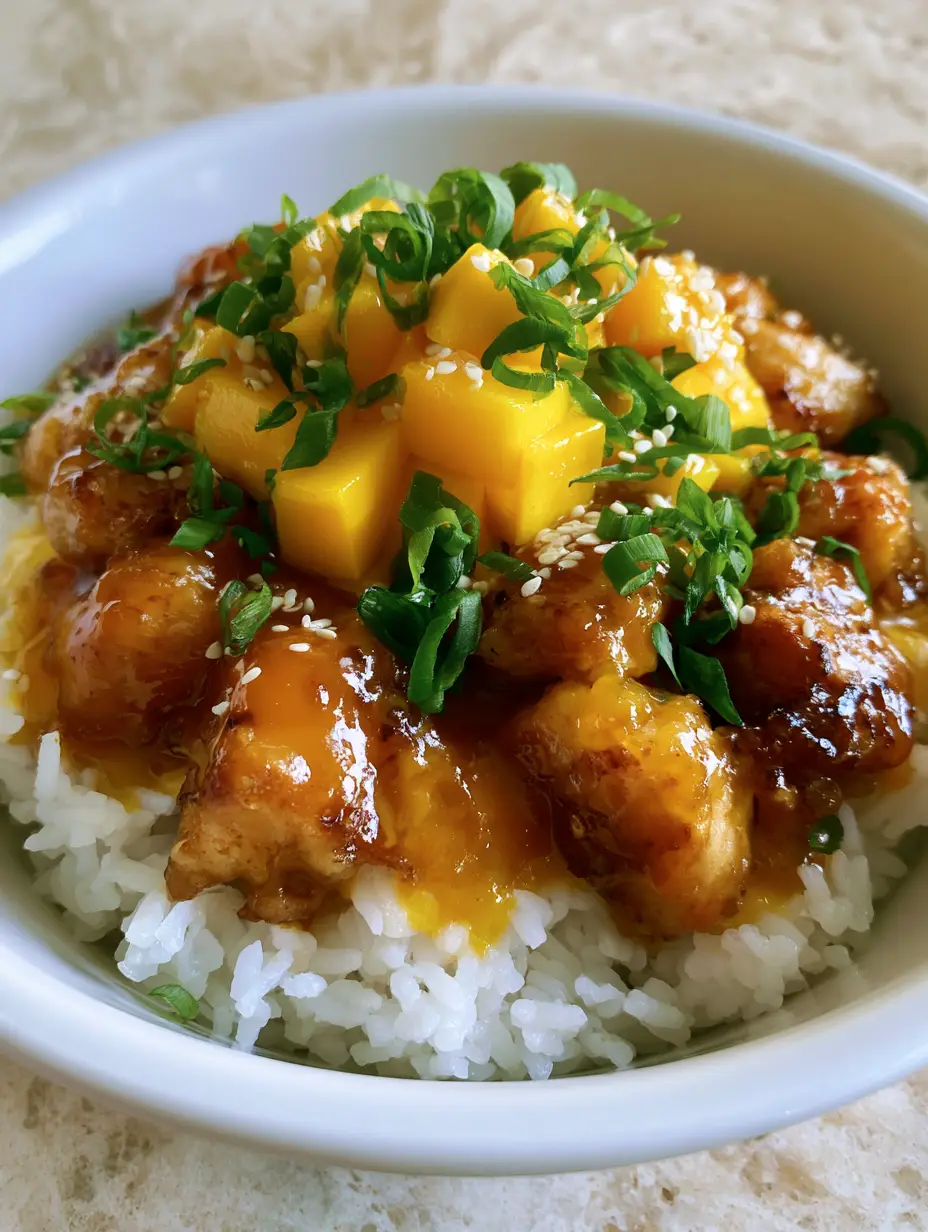
Mango Glazed Chicken with Fluffy Jasmine Rice and Fresh Mango Cubes
Ingredients
Equipment
Method
- Rinse jasmine rice until water is clear. Combine with water in a pot, bring to a boil, then cover and simmer for 15 minutes.
- Remove from heat and let sit covered for 10 minutes to ensure a fluffy texture.
- Heat oil in a skillet over medium-high heat. Add chicken chunks and sear until a deep golden-brown crust forms on all sides.
- Remove chicken. In the same pan, whisk mango nectar, lime juice, and aromatics. Add cornstarch slurry.
- Simmer until the sauce becomes a thick, translucent, glossy orange. Toss chicken back in to coat heavily.
- Bowl the rice, top with glazed chicken, fresh mango cubes, sliced scallions, and sesame seeds.
Notes
Use slightly firm mangoes for the topping to maintain clean rectangular shapes.
Closing & Call to Action
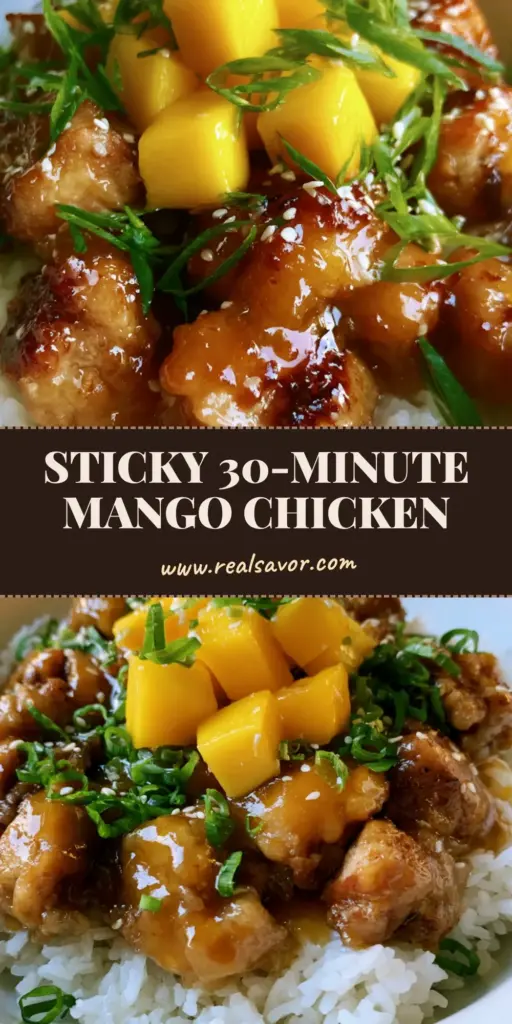
Mastering the Mango Glazed Chicken is about more than just a meal; it’s about understanding how simple ingredients like fruit nectar and cornstarch can create a high-end, restaurant-quality finish. The vibrant colors and sticky, sweet-savory profile make this a guaranteed crowd-pleaser that looks just as good as it tastes. If you enjoyed this recipe, please leave a comment below and share your photos with us!
Don’t forget to follow us on Pinterest for more visually stunning recipe inspiration. If you love this tropical vibe, check out our other bowl recipes like the steak and avocado rice bowl or the whole30 steak bowl for more healthy, flavor-packed ideas.