Capturing the raw power of a summer thunderstorm in a handheld vessel might sound like the work of a wizard, but with this DIY Lightning in a Jar, it is pure, beautiful science. This project creates a stunning visual display where jagged streaks of white “lightning” dance through a dark, atmospheric indigo sky, all within the safety of a glass mason jar.
Whether you are looking for a rainy-day activity to keep the kids engaged or a striking piece of temporary room decor, this experiment delivers high-impact visual results. The contrast between the deep indigo base and the brilliant white acrylic swirls mimics the chaotic beauty of a real storm front moving across the horizon.
By using the principles of liquid density and chemical reactions, we can simulate the turbulent movement of clouds and the sudden flash of a lightning bolt. This experiment is a fantastic way to introduce young scientists to the concepts of polarity and gas expansion while creating something truly “Instagram-mable.”
Why You Will Love This Electric Science Project
- High Visual Contrast: The stark white acrylic paint against the dark indigo water creates a “lightning” effect that is incredibly photorealistic.
- Dynamic Movement: Watch as silver glitter and carbonation bubbles create a swirling, viscous environment that looks like a storm in motion.
- Simple Kitchen Chemistry: Using basic household items like vegetable oil and effervescent tablets, you can demonstrate complex scientific principles.
- Perfect for All Ages: While it looks sophisticated, the process is simple enough for toddlers to help with, provided there is adult supervision.
- Educational Value: This project is a gateway into discussing weather patterns, density, and how different substances interact when they cannot mix.
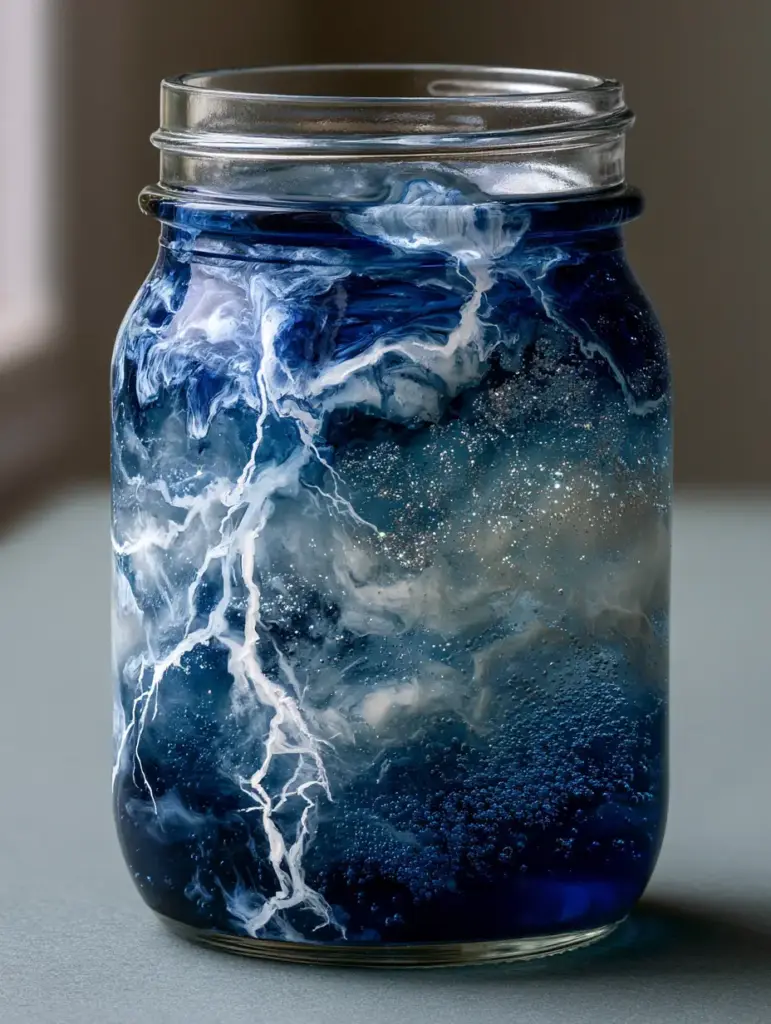
The Essential Elements for Your Desktop Thunderstorm
To achieve the specific visual depth seen in our blueprint, the choice of ingredients is crucial for creating the “layers” of the storm. Every component serves a structural or aesthetic purpose to ensure the “lightning” holds its shape within the jar.
1 cup (240ml) Water: This serves as the base of our atmosphere and will be tinted to create the dark, moody sky. It provides the medium for the effervescent reaction to occur.
2-3 drops Blue and Purple Food Coloring: Mixing these colors creates the “dark indigo” hue specified in our visual blueprint. This deep shade is essential for making the white paint streaks pop.
2 cups (480ml) Clear Vegetable Oil: The oil sits on top of the water due to its lower density, creating a thick, viscous layer where the “lightning” will be suspended. Its clarity is vital for seeing the fine silver glitter.
1 tbsp (15ml) White Acrylic Paint: Unlike food coloring, acrylic paint is heavier and more opaque, allowing it to form those distinct, jagged streaks that mimic lightning bolts. We will thin it slightly for the best flow.
1 tsp (5g) Fine Silver Glitter: These tiny particles catch the light as they are tossed around by the bubbles, simulating the shimmering rain and ice crystals found in a real thunderhead.
2-3 Effervescent Tablets (Alka-Seltzer): These are the “engine” of the experiment, releasing carbon dioxide gas that carries the colored water and paint upward through the oil. They create the rising bubbles seen in the visual prompt.
Tools for Creating a Storm in a Jar
Having the right tools on hand ensures that you can layer your liquids precisely without premature mixing, which can lead to a “muddy” looking storm. Precision is key when you want those jagged streaks of white to remain distinct.
- 1 Quart (946ml) Glass Mason Jar: A clear, smooth-sided jar is best for viewing the reaction from all angles.
- Small Mixing Bowls: You will need these to tint your water and prep your paint-water mixture.
- Long-Handled Spoon: Useful for stirring the indigo water without creating too many initial bubbles.
- Dropper or Pipette: This is the secret to getting the paint into the oil layer in controlled, “jagged” streaks.
- Neutral Surface: A grey or white countertop will help the indigo colors stand out during the reaction.
Step-By-Step Instructions to Capture the Lightning
Phase 1: Creating the Deep Indigo Atmosphere
Begin by pouring 1 cup (240ml) of room temperature water into your glass mason jar. Add 2 drops of blue food coloring and 1 drop of purple food coloring, stirring gently until the water reaches a dark indigo shade that looks like a midnight sky.
If you are planning to serve a thematic snack alongside this experiment, consider prepping some Pineapple Lemonade Candy Apples which offer a bright contrast to the dark storm colors. The deep water should be dark but still transparent enough to see light passing through it.
Phase 2: Layering the Viscous Sky
Slowly pour the 2 cups (480ml) of clear vegetable oil down the side of the jar. You will notice the oil sits perfectly on top of the indigo water because it is less dense and hydrophobic, meaning it won’t mix with the water.
Wait about 2 minutes for the layers to fully separate. You should see a sharp line between the dark water and the clear oil; this is the “horizon” of your storm. Sprinkle the fine silver glitter over the top of the oil and watch as it slowly begins to sink and suspend itself in the golden-hued oil.
Phase 3: Preparing the Lightning Streaks
In a small bowl, mix 1 tbsp (15ml) of white acrylic paint with 1 tsp (5ml) of water. This thins the paint just enough to make it “drop” through the oil while remaining thick enough to stay opaque.
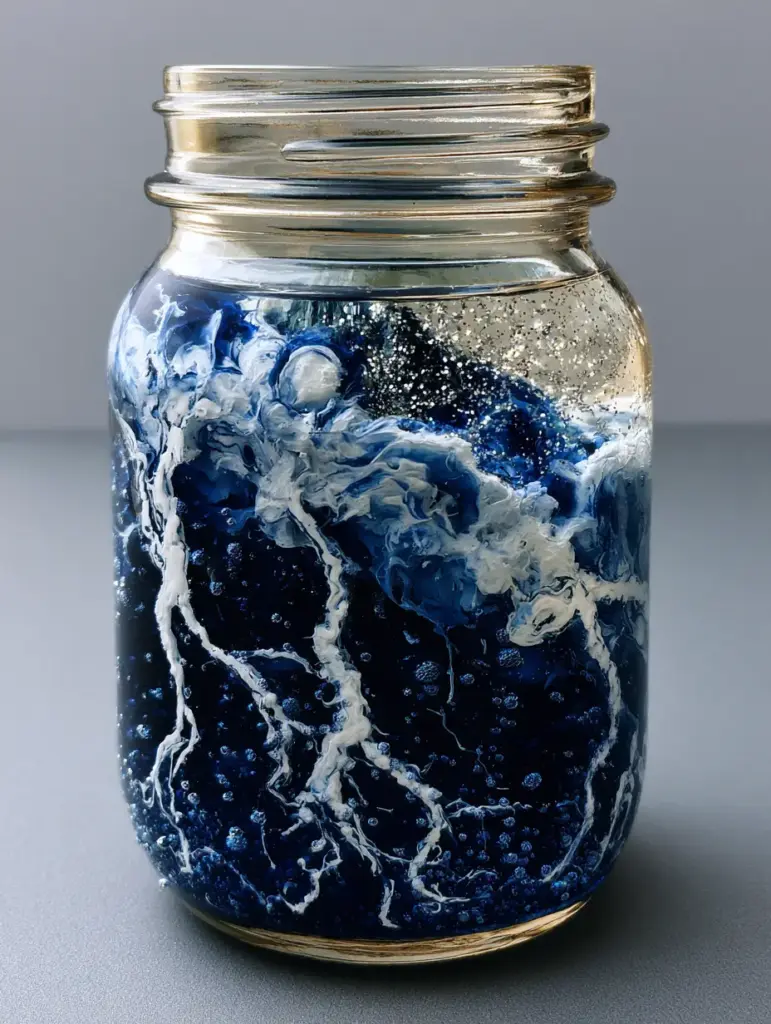
Using your dropper, suck up some of the white paint mixture. Insert the dropper into the oil layer and squeeze out small, erratic bursts of paint. The paint will begin to sink through the oil in jagged, cloudy textures, looking exactly like distant lightning strikes hitting the indigo water below.
Phase 4: Igniting the Effervescent Reaction
Now it is time for the magic. Break an effervescent tablet into four pieces. Drop one piece into the jar and watch as it sinks through the oil and hits the water. As it dissolves, it releases carbon dioxide, which hitches a ride on the indigo water droplets and paint streaks.
Observe the “Visual Cues”: You will see dozens of tiny carbonation bubbles rising through the layers. The white paint will be pushed back up through the oil, creating swirling, white acrylic paint swirls and “lightning” clouds. The silver glitter will dance in the turbulence, catching the light like frozen rain in a tempest.
Expert Tips for a More Realistic Storm
- Control the Speed: Don’t drop all the tablet pieces at once. Start with a quarter of a tablet to see a gentle storm, then add more for a “supercell” effect.
- The Flash Effect: Place a flashlight or your smartphone light directly underneath the jar. The light will catch the white paint and silver glitter, making the “lightning” appear to glow from within.
- Paint Consistency: If your paint sinks too fast without swirling, it might be too heavy. Add a few more drops of water to the paint mixture next time to increase its buoyancy during the reaction.
- Temperature Matters: Using slightly warm water can speed up the effervescent reaction, creating a more violent and “active” storm.
Maintenance and Safety Advice
While this isn’t a food recipe, it’s often made in the kitchen. Ensure you don’t confuse your science materials with your dinner prep! This DIY Lightning in a Jar is for observation only and should never be consumed. Once the reaction has finished and the bubbles stop, the layers will eventually settle.
The jar can be kept for 2-3 days, but the acrylic paint will eventually settle at the bottom and may stain the glass if left too long. When you are finished, the oil can be poured into a sealable container and disposed of in the trash—never pour oil down the sink as it can clog your plumbing!
What to Serve for a Stormy Night In
After a successful science experiment, you’ll likely have worked up an appetite. To keep with the theme of easy, crowd-pleasing “comfort” projects, why not whip up some Homemade Corn Dog Bites? They are the perfect finger food for a family night.
If you want something a bit more substantial while you watch the bubbles rise, these Pulled Pork Sliders are a fantastic choice. For a lighter side that provides a nice crunch, our Homemade Coleslaw Recipe pairs beautifully with any “stormy” dinner menu.
Frequently Asked Questions
Because the oil becomes mixed with paint and glitter, we do not recommend reusing it for cooking. It can be used for another round of the experiment, but eventually, it will become too cloudy to see through.
While food coloring works for a standard lava lamp effect, it is water-based and will mix instantly with the bottom layer. Acrylic paint is heavier and more opaque, which is what creates the ‘jagged’ streaks that look like real lightning.
The ‘active’ lightning effect lasts as long as the effervescent tablet is bubbling (about 2-3 minutes per piece). However, the streaks of paint will remain suspended in the oil for several hours.
Yes, it is a safe non-toxic experiment, but it requires adult supervision. Ensure children do not attempt to drink the mixture or put the effervescent tablets in their mouths.
If the jar is shaken or if the liquids are poured too quickly, they may temporarily emulsify. Let the jar sit undisturbed for 10-15 minutes and the layers should separate again due to their different densities.
The Ultimate DIY Lightning in a Jar Recipe
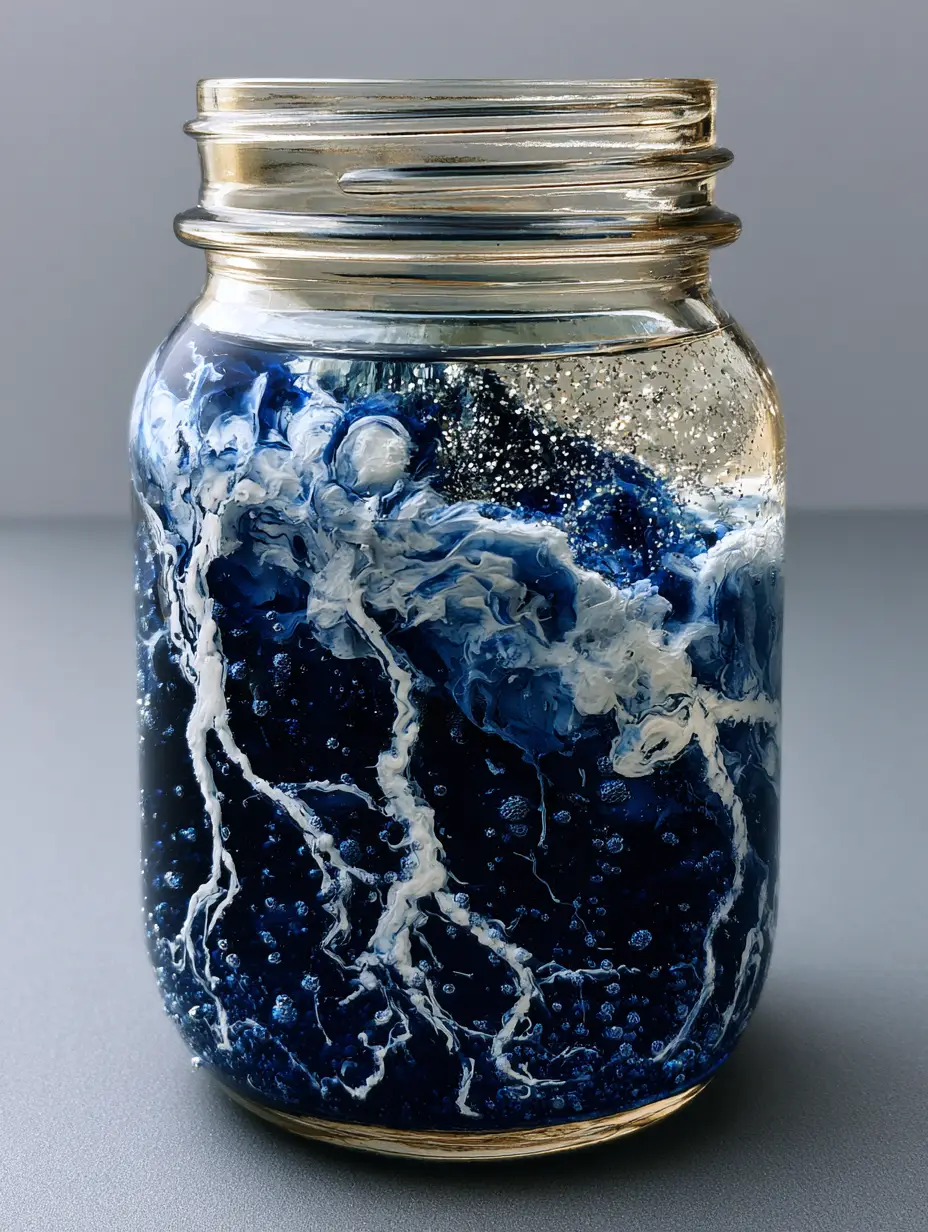
DIY Lightning in a Jar: A Mesmerizing Weather Science Experiment
Ingredients
Equipment
Method
- Fill the mason jar with 1 cup of water and add food coloring until it is a dark indigo.
- Slowly pour the vegetable oil over the water and let it settle into two distinct layers.
- Sprinkle glitter into the oil. Use a dropper to add thinned white acrylic paint in jagged bursts into the oil layer.
- Drop pieces of the effervescent tablet into the jar to start the bubbling 'lightning' reaction.
Notes
Dispose of oil in the trash, not the sink.
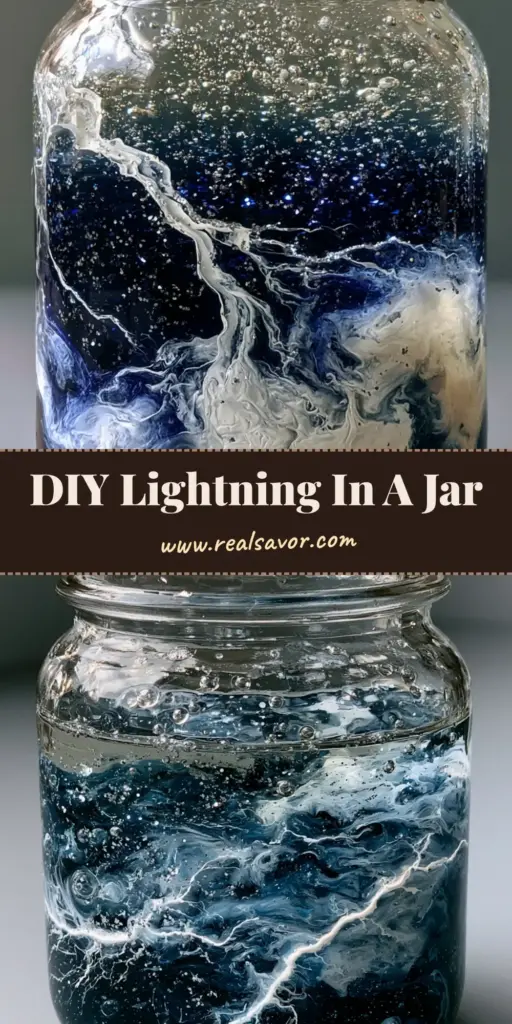
Capture Your Own Storm Today
Creating this DIY Lightning in a Jar is a rewarding experience that combines the precision of a laboratory with the creativity of an art studio. The way the white acrylic swirls through the dark indigo water is truly a sight to behold, and it’s a project that never fails to impress guests or students.
We would love to see your “stormy” creations! Did you add extra glitter? Did you use a different color for your sky? Let us know in the comments below. Don’t forget to follow us on Pinterest and share your photos with our community!